
Introduction
Liberalism is one of the most influential political ideologies in the modern world. It has shaped constitutional governments, individual rights, market economies, and democratic institutions across continents. At its core, liberalism emphasizes individual freedom, equality before the law, limited government, and the protection of civil liberties. However, liberalism is not a single, fixed doctrine. It has evolved over time in response to social, economic, and political changes. From its early classical form to modern welfare-oriented liberalism and finally to contemporary versions that address globalization, identity, and social justice, liberalism has undergone significant transformation.
Understanding the different forms of liberalism is essential for Political Science students because it explains how ideas about freedom, the state, and society have developed over centuries. This article explores the main features of classical, modern, and contemporary liberalism, their historical contexts, key thinkers, and their relevance in today’s political world.

Table of Contents
The Foundations of Liberal Thought
Liberalism emerged in Europe during the seventeenth and eighteenth centuries, particularly in England and France. It developed as a reaction against absolute monarchy, feudalism, and religious authority. Thinkers such as John Locke, Montesquieu, and later Adam Smith argued that individuals possess natural rights that no government can violate. These rights included life, liberty, property, and freedom of conscience.
The Enlightenment played a crucial role in shaping liberal ideas. Reason, scientific thinking, and belief in human progress replaced traditional authority. Liberal thinkers believed that society could be improved through rational laws, constitutional government, and the protection of individual freedom. This intellectual background laid the foundation for classical liberalism.
Classical Liberalism
Classical liberalism developed mainly in the eighteenth and nineteenth centuries. It focused on protecting individual liberty from excessive state control. Classical liberals believed that human beings are rational and capable of making their own decisions. Therefore, the role of the state should be limited.
One of the key principles of classical liberalism is individual freedom. This includes freedom of speech, religion, association, and movement. The individual, not the state or community, is seen as the basic unit of society. Personal choice and self-interest are considered natural and beneficial for social progress.
Another important idea is limited government. Classical liberals argued that government power should be restricted by law. A constitution, separation of powers, and rule of law were essential to prevent tyranny. The state’s main function was to protect life, property, and personal liberty, not to interfere in people’s private lives.
Economic freedom was also central to classical liberalism. Thinkers like Adam Smith promoted free markets and minimal government intervention in the economy. According to them, competition and private enterprise lead to efficiency, innovation, and prosperity. The idea of “laissez-faire” economics became closely associated with classical liberal thought.
Property rights were considered fundamental. Ownership of property gave individuals independence and security. Classical liberals believed that protecting property encouraged investment and economic growth.
John Locke is often regarded as the father of classical liberalism. His theory of natural rights and social contract influenced democratic constitutions around the world. Other important figures include Adam Smith, Jeremy Bentham, and John Stuart Mill. Mill, in particular, emphasized individual liberty and freedom of expression, arguing that open debate leads to truth and social improvement.
Despite its achievements, classical liberalism faced criticism. It focused mainly on legal equality but ignored social and economic inequalities. Many people, especially workers, women, and the poor, lacked real freedom because of poverty, poor education, and exploitation. These limitations led to the development of modern liberalism.
Modern Liberalism
Modern liberalism emerged in the late nineteenth and early twentieth centuries as a response to industrialization, urban poverty, and social inequality. While classical liberals emphasized freedom from state interference, modern liberals argued that true freedom requires certain social and economic conditions.
Modern liberals believed that the state has a positive role to play in improving people’s lives. They supported government intervention in areas such as education, healthcare, housing, and employment. The goal was not to control individuals but to create equal opportunities.
One of the main ideas of modern liberalism is social justice. Freedom is meaningless if people are trapped in poverty or discrimination. Therefore, the state should ensure a minimum standard of living for all citizens. Welfare policies, social security, and labor rights became part of liberal political programs.

Equality also gained greater importance. Classical liberalism focused on legal equality, but modern liberalism emphasized social and economic equality. Progressive taxation, public education, and workers’ protection were seen as tools to reduce inequality.
Modern liberals also supported democracy more strongly. They believed that political participation, voting rights, and representation were essential for protecting individual interests. Expansion of suffrage to women and working-class people reflected this commitment.
Thinkers such as T.H. Green and L.T. Hobhouse argued that freedom is not just the absence of restrictions but the ability to develop one’s potential. According to them, the state should remove obstacles that prevent individuals from achieving their goals.
The rise of welfare states in Europe after World War II reflected modern liberal ideas. Governments introduced public healthcare, pensions, unemployment benefits, and education reforms. These policies aimed to balance individual freedom with social responsibility.
However, modern liberalism also faced criticism. Some argued that excessive government intervention reduced personal responsibility and economic efficiency. Others believed that welfare policies created dependency and weakened market competition. These debates influenced the emergence of contemporary forms of liberalism.
Contemporary Liberalism
Contemporary liberalism refers to the diverse liberal ideas that developed in the late twentieth and early twenty-first centuries. It includes various approaches such as neoliberalism, social liberalism, multicultural liberalism, and rights-based liberalism.
Neoliberalism emphasizes free markets, privatization, and reduced government spending. It gained popularity in the 1980s under leaders like Ronald Reagan and Margaret Thatcher. Neoliberals argued that economic freedom leads to growth and efficiency. They supported deregulation, globalization, and private enterprise.
However, neoliberalism has been criticized for increasing inequality and weakening public services. Many people argue that market forces alone cannot ensure social justice or protect vulnerable groups.
Social liberalism continues the tradition of modern liberalism by supporting welfare policies and state intervention. It focuses on human rights, social inclusion, and equality of opportunity. Social liberals believe that governments should address issues such as poverty, gender inequality, and discrimination.
Multicultural liberalism deals with cultural diversity in modern societies. As migration increased, liberal democracies faced new challenges related to identity, religion, and minority rights. Contemporary liberals argue that individual freedom should include respect for cultural differences, as long as basic human rights are protected.
Rights-based liberalism emphasizes human rights at both national and international levels. Freedom of expression, gender equality, LGBTQ+ rights, and protection of minorities are central concerns. International organizations and courts now play a role in promoting liberal values globally.
Contemporary liberalism also addresses environmental issues. Many liberals support policies to protect the environment while balancing economic growth. Climate change, sustainability, and green technology are now part of liberal political debates.
The digital age has created new challenges for liberalism. Issues such as data privacy, freedom of information, and online expression require updated legal frameworks. Contemporary liberals argue that individual rights must be protected in the digital world as well.
Comparing Classical, Modern, and Contemporary Liberalism
While all forms of liberalism share a commitment to individual freedom, their understanding of freedom differs. Classical liberalism focused on negative freedom, meaning freedom from government interference. Modern liberalism emphasized positive freedom, meaning the ability to live a fulfilling life with social support. Contemporary liberalism tries to balance both approaches.
The role of the state has also changed. Classical liberals wanted minimal government. Modern liberals accepted an active welfare state. Contemporary liberals debate how much the state should intervene, especially in economic and social matters.
Economic ideas have evolved as well. Classical liberalism supported free markets without restrictions. Modern liberalism accepted regulation and welfare policies. Contemporary liberalism includes both market-oriented and socially-oriented approaches.
Equality has become more central over time. Classical liberals focused on legal equality. Modern liberals emphasized social equality. Contemporary liberals include cultural, gender, and identity-based equality.
Despite these differences, all forms of liberalism aim to protect human dignity, personal freedom, and democratic values.
Liberalism and Democracy
Liberalism and democracy are closely connected. Liberal principles such as free elections, rule of law, freedom of speech, and minority rights form the foundation of democratic systems. Liberal democracy combines popular sovereignty with constitutional limits on power.
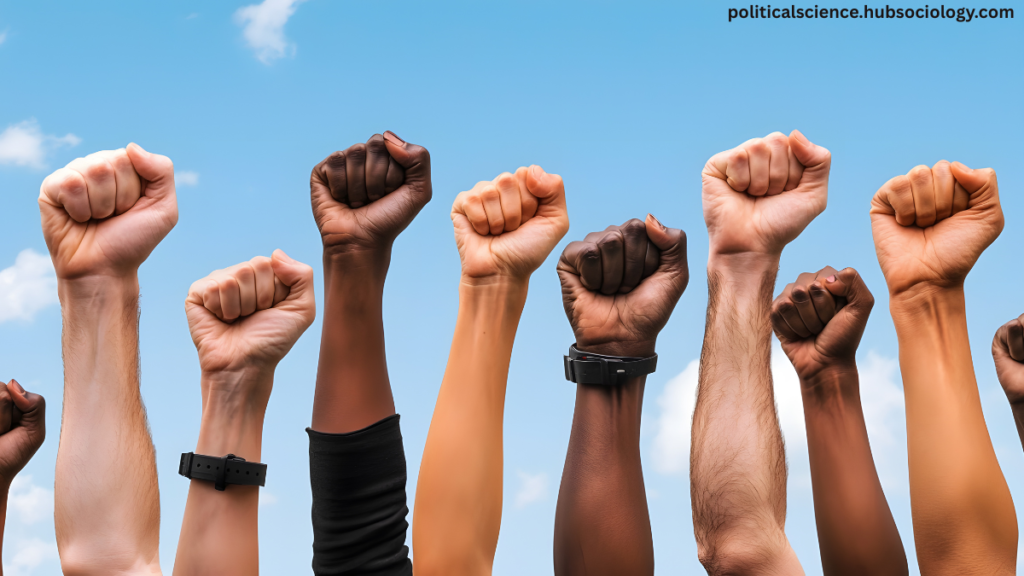
However, tensions exist between majority rule and individual rights. Liberalism protects minorities from the tyranny of the majority. Courts, constitutions, and human rights laws ensure that democratic decisions do not violate basic freedoms.
In many countries, liberal democracy faces challenges from authoritarianism, populism, and nationalism. These movements often criticize liberal values, claiming they weaken national identity or social unity. Defending liberal principles in such contexts remains a major task for contemporary politics.
Criticism of Liberalism
Liberalism has been criticized from various perspectives. Marxists argue that liberalism protects capitalist interests and ignores class inequality. Feminists point out that early liberalism excluded women from political rights. Communitarian thinkers say liberalism overemphasizes individualism and weakens social bonds.
Postcolonial critics argue that liberalism developed in Western contexts and does not always respect non-Western cultures. They claim that liberal values were sometimes used to justify colonial domination.
Despite these criticisms, liberalism has shown flexibility. It has adapted to new demands by including social justice, gender equality, and cultural rights in its framework.
The Future of Liberalism
Liberalism continues to evolve. Globalization, technological change, climate crisis, and social movements are shaping new liberal ideas. The challenge is to protect individual freedom while addressing inequality, environmental risks, and cultural diversity.
Young generations demand more inclusive and sustainable policies. Liberalism must respond by promoting economic fairness, digital rights, and environmental responsibility without sacrificing core freedoms.
In many parts of the world, liberal values such as free speech, independent courts, and human rights are under pressure. The survival of liberal democracy depends on public trust, strong institutions, and active citizenship.
Conclusion
Liberalism is not a single, unchanging ideology. It has developed through classical, modern, and contemporary forms in response to historical conditions. Classical liberalism emphasized individual freedom and limited government. Modern liberalism expanded the role of the state to promote social justice and equality. Contemporary liberalism addresses new challenges such as globalization, cultural diversity, digital rights, and environmental protection.
Despite differences, all forms of liberalism share a commitment to human dignity, personal liberty, and democratic governance. For Political Science students, understanding these variations is essential to analyze political systems, public policies, and global debates.
Liberalism remains one of the most influential and adaptable political ideologies. Its ability to evolve while preserving core values explains its lasting importance in the modern world.
Topic Related Questions
5 Marks Questions
- What is Liberalism?
- Define Classical Liberalism.
- Mention any two features of Classical Liberalism.
- Who is considered the father of Liberalism?
- What is meant by limited government?
- What is economic liberalism?
- Define Modern Liberalism.
- What is welfare state?
- What is positive freedom?
- What is neoliberalism?
- Define individual liberty.
- What is rule of law?
- What is social justice in liberal thought?
- What is multicultural liberalism?
- Name two thinkers of Modern Liberalism.
10 Marks Questions
- Explain the main features of Classical Liberalism.
- Discuss the role of the state in Modern Liberalism.
- Distinguish between Classical and Modern Liberalism.
- Explain the concept of freedom in Liberalism.
- Write a note on John Locke’s contribution to Liberalism.
- Discuss the economic ideas of Classical Liberalism.
- Explain the idea of welfare state in Modern Liberalism.
- Discuss the meaning of positive and negative freedom.
- Explain the rise of Modern Liberalism.
- Write a short note on Neoliberalism.
- Discuss the importance of individual rights in Liberalism.
- Explain the relationship between Liberalism and Democracy.
- Write a note on equality in Liberal thought.
- Explain the concept of social justice in Liberalism.
- Discuss the criticisms of Classical Liberalism.
15 Marks Questions
- Discuss the evolution of Liberalism from Classical to Modern forms.
- Explain the main principles of Classical Liberalism in detail.
- Critically examine Modern Liberalism as a response to Classical Liberalism.
- Discuss Contemporary Liberalism and its major concerns.
- Compare Classical, Modern, and Contemporary Liberalism.
- Evaluate the role of the state in Liberal political theory.
- Discuss the concept of freedom in Liberalism.
- Explain the relationship between Liberalism and social justice.
- Critically analyze Neoliberalism.
- Discuss the relevance of Liberalism in the 21st century.
- Examine the contribution of John Stuart Mill to Liberal thought.
- Discuss Liberalism as a political ideology.
- Analyze the criticisms of Liberalism.
- Discuss the impact of Liberalism on modern democracy.
- Examine the future challenges of Liberalism.
2 thoughts on “Liberalism: Classical, Modern and Contemporary Forms”