
Classical liberalism is one of the most influential political ideologies in the history of modern political thought. It emerged as a powerful intellectual response to absolutist monarchies, feudal social structures, and excessive state control that dominated Europe from the medieval period to the early modern era. Rooted in the ideals of individual liberty, limited government, private property, and free markets, classical liberalism laid the philosophical foundation for modern democracy, capitalism, and constitutional governance. For students of Political Science, understanding classical liberalism is essential because it shapes many contemporary political institutions, legal systems, and economic practices across the world.

The development of classical liberalism was closely linked with major historical transformations such as the Renaissance, the Reformation, the Scientific Revolution, and most importantly, the Enlightenment. Thinkers associated with classical liberalism sought to place reason, individual autonomy, and natural rights at the center of political and social life. Their ideas challenged traditional authority and emphasized the moral and political primacy of the individual over the state.
Table of Contents
Meaning of Classical Liberalism
Classical liberalism can be defined as a political and economic doctrine that advocates maximum individual freedom with minimal state interference. At its core, classical liberalism views the individual as a rational, self-interested, and morally autonomous being who possesses certain natural rights simply by virtue of being human. These rights are considered universal, inalienable, and prior to the existence of the state.
In classical liberal thought, the state is not an all-powerful authority but a necessary institution created through social consent to protect individual rights. The primary function of government is to safeguard life, liberty, and property, rather than to control or direct the lives of citizens. Classical liberals argue that when individuals are free to pursue their own interests within a framework of law, society as a whole benefits through increased prosperity, innovation, and social progress.
Classical liberalism also emphasizes the importance of legal equality, meaning that all individuals are equal before the law regardless of social status, wealth, or birth. This idea was revolutionary in societies structured around rigid hierarchies and inherited privilege. In this sense, classical liberalism played a crucial role in the decline of feudalism and the rise of modern citizenship.
Historical Background and Intellectual Origins
The roots of classical liberalism can be traced back to seventeenth and eighteenth-century Europe, particularly in England and France. The English Civil War, the Glorious Revolution of 1688, and the American and French Revolutions provided fertile ground for liberal ideas to develop and spread. These events demonstrated the possibility of limiting political power through constitutional means and popular consent.
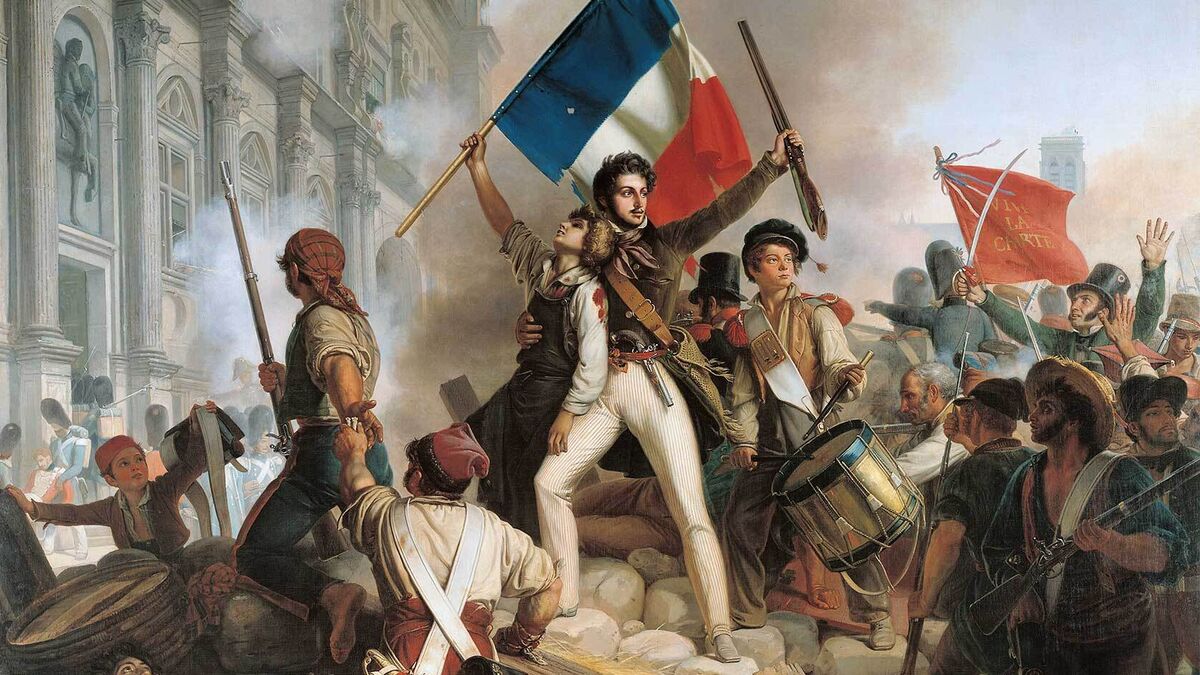 Image from Image from YourDictionary
John Locke is widely regarded as the father of classical liberalism. In his “Two Treatises of Government,” Locke argued that individuals possess natural rights to life, liberty, and property, and that governments exist only to protect these rights. If a government fails in this duty, citizens have the right to resist or overthrow it. Locke’s ideas profoundly influenced liberal constitutionalism and democratic thought.
Other significant contributors to classical liberalism include Adam Smith, who developed the economic foundations of liberalism through his advocacy of free markets and limited state intervention, and John Stuart Mill, who emphasized individual liberty, freedom of expression, and protection from social tyranny. Although Mill is sometimes associated with later liberal traditions, many of his ideas are deeply rooted in classical liberal principles.
Individual Liberty as the Core Principle
Individual liberty is the central pillar of classical liberalism. Classical liberals argue that freedom is both a moral right and a practical necessity for human development. Liberty allows individuals to make choices, pursue their interests, and express their beliefs without undue interference from the state or society.
Classical liberalism distinguishes between negative and positive liberty, placing greater emphasis on negative liberty. Negative liberty refers to freedom from external constraints, especially coercive actions by the state. According to classical liberals, the absence of interference is more important than the provision of welfare or social support by the government.
Freedom of thought, speech, religion, and association are considered essential components of individual liberty. Classical liberals believe that open debate and diversity of opinions lead to truth, intellectual progress, and social harmony. Suppression of dissent is seen as harmful not only to individuals but also to society as a whole.
Limited Government and Rule of Law
Another defining characteristic of classical liberalism is the principle of limited government. Classical liberals reject the idea of an omnipotent state and argue that political power must be constrained by constitutional rules and legal frameworks. Government authority should be clearly defined, divided, and regulated to prevent abuse.
The rule of law is central to this idea of limited government. Laws must be general, public, stable, and applied equally to all citizens, including those in positions of power. Arbitrary rule, discretionary authority, and unchecked executive power are viewed as threats to liberty.
Classical liberals also support the separation of powers among different branches of government. This system of checks and balances ensures that no single institution can dominate the political system. By limiting government power, classical liberalism seeks to protect individuals from tyranny and preserve political freedom.
Natural Rights and Private Property
The concept of natural rights is fundamental to classical liberal thought. Natural rights are believed to exist independently of social or political institutions and are derived from human nature or divine order. These rights include the right to life, liberty, and property.
Private property holds a particularly important place in classical liberalism. Property rights are seen as essential for individual independence, economic security, and personal freedom. Without secure property rights, individuals become dependent on the state or powerful elites, undermining their autonomy.
John Locke famously argued that property originates from labor, asserting that when individuals mix their labor with natural resources, they acquire legitimate ownership. Classical liberals maintain that protecting property rights encourages productivity, innovation, and economic growth, ultimately benefiting society.
Free Market Economy and Economic Freedom
Classical liberalism strongly supports a free market economy based on voluntary exchange, competition, and minimal government intervention. Economic freedom is considered an extension of personal liberty, allowing individuals to choose their occupations, engage in trade, and accumulate wealth according to their abilities and efforts.
Adam Smith’s concept of the “invisible hand” captures the classical liberal belief that individual pursuit of self-interest can lead to collective prosperity. When markets operate freely, prices, production, and distribution are regulated by supply and demand rather than state control.
Classical liberals are generally opposed to excessive taxation, state monopolies, and economic planning. They argue that government interference distorts markets, reduces efficiency, and limits individual choice. However, classical liberalism does recognize a limited role for the state in maintaining law and order, enforcing contracts, and providing basic public goods.
Equality Before Law and Meritocracy
While classical liberalism does not advocate economic equality, it strongly supports legal and political equality. All individuals are entitled to equal protection under the law, and no one should receive special privileges based on birth or status. This idea challenged aristocratic systems and contributed to the rise of merit-based social structures.
Classical liberals believe that social and economic differences are acceptable as long as they arise from free competition and individual effort. Inequality is seen as a natural outcome of diverse talents and choices, rather than as an inherent injustice. What matters is equality of opportunity, not equality of outcome.
Tolerance, Pluralism, and Secularism
Classical liberalism promotes tolerance and pluralism as essential features of a free society. Individuals should be free to hold different beliefs, lifestyles, and cultural practices as long as they do not harm others. Religious tolerance, in particular, was a major concern for early liberals who sought to end sectarian conflicts and state-imposed orthodoxy.
Secularism in classical liberalism does not necessarily imply hostility toward religion but emphasizes the separation of religious authority from political power. The state should remain neutral in matters of belief, allowing individuals to practice religion freely without coercion or discrimination.
Significance of Classical Liberalism
The significance of classical liberalism lies in its enduring impact on modern political systems. Constitutional democracy, civil rights, free markets, and individual freedoms all owe much to classical liberal thought. Many contemporary political ideologies, including modern liberalism, libertarianism, and even aspects of conservatism, have evolved from classical liberal foundations.

For Political Science students, classical liberalism provides a framework for understanding debates about state power, individual rights, economic policy, and constitutional governance. It helps explain the philosophical roots of political institutions and ongoing tensions between liberty and authority in modern societies.
Conclusion
Classical liberalism represents a foundational tradition in political thought that prioritizes individual liberty, limited government, natural rights, and economic freedom. Emerging in response to authoritarian rule and social inequality, it offered a vision of society based on reason, consent, and freedom. Despite criticisms and later modifications, classical liberalism continues to shape political discourse and institutional design across the world.
Understanding the meaning and characteristics of classical liberalism enables students to critically engage with contemporary political debates and appreciate the historical evolution of modern political ideas. As a theory and practice, classical liberalism remains a cornerstone of democratic and constitutional governance in the modern age.
Marks Questions
- What is meant by Classical Liberalism?
- Define individual liberty in Classical Liberal thought.
- What is the concept of limited government in Classical Liberalism?
- Explain the idea of natural rights in Classical Liberalism.
- Why is private property considered important in Classical Liberalism?
- What role does the rule of law play in Classical Liberal ideology?
- What is meant by negative liberty in Classical Liberalism?
- How does Classical Liberalism view the role of the state?
- Mention the economic principles of Classical Liberalism.
- Why is equality before law significant in Classical Liberal thought?
2 thoughts on “Classical Liberalism: Meaning & Characteristics”