
Introduction
Liberalism is one of the most influential political ideologies in modern history. It has shaped democratic institutions, constitutional governments, human rights frameworks, and economic systems across the world. The ideology emerged as a response to absolute monarchy, religious intolerance, and feudal social structures. At its core, liberalism emphasizes individual liberty, equality before the law, constitutional government, and the protection of civil rights.
However, liberalism has not remained static. From its origins in the seventeenth and eighteenth centuries to its modern form in the twentieth and twenty-first centuries, liberalism has undergone significant transformation. The early form, known as Classical Liberalism, focused on limited government, free markets, and individual freedom from state interference. Modern Liberalism, in contrast, recognizes the role of the state in promoting social justice, welfare, and equal opportunities.

The evolution of liberalism reflects changing social, economic, and political conditions. Industrialization, capitalism, democracy, social inequality, and globalization have all influenced liberal thought. Understanding this evolution is essential for students of Political Science because liberalism continues to influence contemporary debates on governance, citizenship, economic policy, and human rights.
Table of Contents
Historical Background of Liberalism
The roots of liberalism can be traced to the European Enlightenment of the seventeenth and eighteenth centuries. Enlightenment thinkers challenged traditional authority and emphasized reason, scientific inquiry, and individual autonomy. The rise of the middle class, the decline of feudalism, and growing opposition to absolute monarchy created favorable conditions for liberal ideas.
The English Revolution of 1688, commonly known as the Glorious Revolution, played a crucial role in the development of liberal thought. It established the principle that governmental authority should be limited by law and that rulers were accountable to the people.
The American Revolution of 1776 and the French Revolution of 1789 further popularized liberal ideals such as liberty, equality, constitutional government, and popular sovereignty. These events demonstrated the practical application of liberal principles and inspired political movements worldwide.
Meaning and Core Principles of Liberalism
The term “liberalism” originates from the Latin word liber, meaning free. Liberalism is fundamentally concerned with the protection and expansion of human freedom.
Several principles have remained central to liberal thought throughout its evolution:
Individual liberty is considered the highest political value. Every individual possesses certain rights and freedoms that should be protected.
Equality before the law ensures that all citizens are treated equally regardless of social status, religion, race, or gender.
Constitutional government limits political power through laws and institutions.
Representative democracy allows citizens to participate in government through elected representatives.
Tolerance and pluralism encourage peaceful coexistence among individuals with different beliefs and lifestyles.
Private property is regarded as an essential foundation of individual independence and economic freedom.
Although these principles remain important, their interpretation has changed over time, leading to the distinction between classical and modern liberalism.
Classical Liberalism: Emergence and Development
Classical Liberalism emerged during the seventeenth and eighteenth centuries. It developed as a reaction against absolute monarchy, aristocratic privilege, and excessive government control.
Classical liberals believed that individuals are rational beings capable of making decisions about their own lives. Therefore, government intervention should be kept to a minimum.
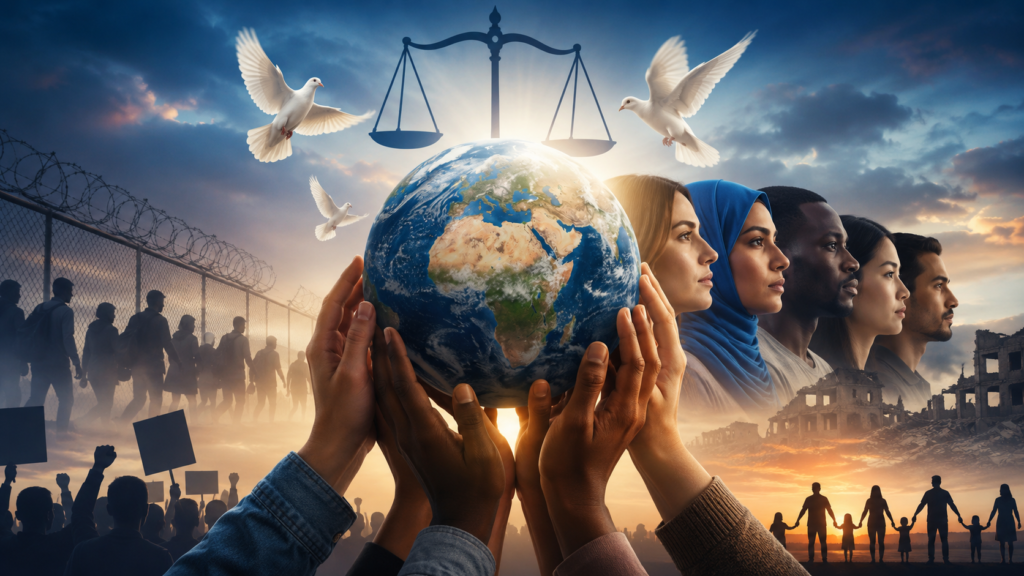
The primary function of the state was to protect life, liberty, and property. Governments were expected to maintain law and order, defend the nation, and protect individual rights. Beyond these functions, state interference was viewed as a threat to personal freedom.
John Locke and Classical Liberalism
The English philosopher John Locke is widely regarded as the father of liberalism.
Locke argued that all individuals possess natural rights, including the rights to life, liberty, and property. According to him, governments derive their authority from the consent of the governed. If a government violates natural rights, citizens have the right to resist or replace it.
Locke’s social contract theory became a foundation for liberal democratic thought and influenced the American Declaration of Independence.
Adam Smith and Economic Liberalism
The Scottish economist Adam Smith extended liberal principles into the economic sphere.
In his famous work The Wealth of Nations (1776), Smith advocated free-market capitalism. He argued that economic prosperity would be maximized when individuals pursued their self-interest in competitive markets.
Smith introduced the concept of the “invisible hand,” suggesting that market forces naturally coordinate economic activities without government intervention.
His ideas became the foundation of laissez-faire economics, which advocates minimal state interference in economic affairs.
Jeremy Bentham and Utilitarianism
Jeremy Bentham contributed to liberal thought through his theory of utilitarianism. He proposed that policies should aim to achieve the greatest happiness for the greatest number of people.
Although Bentham supported reforms, he remained committed to individual freedom and rational governance.
John Stuart Mill and Liberty
John Stuart Mill represented the highest development of classical liberalism.
In his work On Liberty, Mill defended freedom of thought, speech, and expression. He argued that individual liberty should only be restricted to prevent harm to others.
Mill also supported women’s rights, representative government, and educational reforms, making him a bridge between classical and modern liberal traditions.
Key Features of Classical Liberalism
Classical liberalism emphasized negative liberty, meaning freedom from external interference.
The state was viewed as a “necessary evil” whose powers should be limited.
Economic freedom and private property were considered essential for prosperity.
Individual responsibility was prioritized over collective welfare.
Competition was seen as a mechanism for progress and efficiency.
The market was regarded as capable of regulating itself without extensive government involvement.
These principles dominated political and economic thought during the nineteenth century.
Criticism of Classical Liberalism
Despite its contributions, classical liberalism faced significant criticism.
The Industrial Revolution generated immense wealth but also created severe social inequalities. Workers often faced poor working conditions, low wages, and long hours.
Critics argued that unrestricted capitalism favored wealthy individuals and corporations while neglecting the needs of the poor.
The belief that everyone had equal opportunities was challenged by persistent economic disparities.
Furthermore, excessive emphasis on individualism sometimes overlooked social responsibilities and collective well-being.
These criticisms led many thinkers to reconsider the role of the state and paved the way for modern liberalism.
Emergence of Modern Liberalism
Modern Liberalism emerged during the late nineteenth and early twentieth centuries as a response to the limitations of classical liberalism.
The rapid expansion of industrial capitalism revealed that freedom alone was insufficient when large sections of society lacked access to education, healthcare, and economic opportunities.

Modern liberals argued that true freedom requires more than the absence of government interference. Individuals need certain social and economic conditions to fully develop their potential.
As a result, they advocated a more active role for the state in promoting welfare and reducing inequality.
T. H. Green and Positive Liberty
Thomas Hill Green played a crucial role in transforming liberal thought.
Green rejected the classical liberal notion that freedom simply means the absence of restraints. Instead, he introduced the concept of positive liberty.
According to Green, individuals are truly free only when they have the ability and opportunity to develop their capacities.
Poverty, ignorance, and disease can restrict freedom just as much as government oppression.
Therefore, the state has a legitimate role in creating conditions that enable individuals to flourish.
Green’s ideas laid the intellectual foundation for modern liberalism.
L. T. Hobhouse and Social Liberalism
Leonard Trelawny Hobhouse further developed modern liberal thought.
He argued that rights are social creations rather than purely natural phenomena. Society has a responsibility to ensure that individuals can effectively exercise their rights.
Hobhouse supported labor protections, social welfare programs, and progressive taxation.
He believed that economic inequalities could undermine genuine freedom and social harmony.
Welfare State and Modern Liberalism
The twentieth century witnessed the rise of welfare states in many democratic countries.
Modern liberals supported government intervention to address social and economic problems.
Policies associated with modern liberalism include:
- Public education
- Healthcare services
- Social security systems
- Unemployment benefits
- Labor protections
- Anti-poverty programs
The welfare state seeks to balance individual freedom with social justice and collective responsibility.
John Maynard Keynes and Economic Intervention
The Great Depression of the 1930s challenged the assumptions of classical economics.
The economist John Maynard Keynes argued that markets do not always regulate themselves effectively. During economic crises, government intervention may be necessary to stabilize the economy.
Keynes advocated public spending, employment programs, and monetary policies to stimulate demand.
His ideas significantly influenced modern liberal economic policies throughout the twentieth century.
Key Features of Modern Liberalism
Modern liberalism emphasizes positive liberty and equal opportunities.
The state is viewed as a positive instrument for promoting welfare and justice.
Social rights such as education, healthcare, and social security are considered important components of citizenship.
Economic regulation is accepted to prevent exploitation and market failures.
Democratic participation and human rights remain central values.
Modern liberals seek to reconcile individual freedom with social equality.
Classical Liberalism versus Modern Liberalism
Although both forms belong to the liberal tradition, important differences exist.
Classical liberalism focuses on negative liberty, whereas modern liberalism emphasizes positive liberty.
Classical liberals favor minimal government intervention, while modern liberals support an active welfare-oriented state.
Classical liberalism places greater faith in free markets, whereas modern liberalism accepts economic regulation.
Classical liberals prioritize individual responsibility, while modern liberals stress social responsibility and equal opportunities.
Despite these differences, both traditions value constitutional government, democracy, human rights, and individual dignity.
Liberalism in the Contemporary World
Liberalism continues to influence political systems around the globe.
Liberal democratic principles underpin many modern constitutions and international human rights frameworks. Freedom of speech, religious tolerance, rule of law, and representative government remain fundamental liberal ideals.
At the same time, contemporary liberalism faces new challenges.
Globalization has increased economic interdependence but also generated concerns about inequality and cultural identity.
Technological advancements have created debates regarding privacy, surveillance, and digital rights.
Environmental crises have raised questions about balancing economic growth with sustainability.
The rise of populism and authoritarian tendencies in several countries has challenged liberal democratic institutions.
Modern liberals seek to address these issues while preserving individual freedom and democratic governance.
Critiques of Modern Liberalism
Modern liberalism has also attracted criticism from different ideological perspectives.
Conservatives argue that excessive government intervention can undermine personal responsibility and economic efficiency.
Socialists contend that liberal reforms do not adequately address structural inequalities inherent in capitalism.
Communitarian thinkers criticize liberalism for placing too much emphasis on individual rights and insufficient attention on community values.
Postcolonial scholars argue that liberalism has sometimes been used to justify Western dominance and cultural imperialism.
Despite these criticisms, liberalism remains one of the most adaptable and influential political ideologies.
Conclusion
The evolution of liberalism from its classical to modern form reflects changing historical circumstances and societal needs. Classical liberalism emerged as a powerful force against absolute monarchy and championed individual freedom, limited government, and free markets. Thinkers such as John Locke, Adam Smith, Jeremy Bentham, and John Stuart Mill established the intellectual foundations of liberal thought.
However, industrialization and social inequality revealed the limitations of a purely laissez-faire approach. Modern liberalism responded by emphasizing positive liberty, social welfare, and equal opportunities. Thinkers such as T. H. Green, L. T. Hobhouse, and John Maynard Keynes expanded the liberal tradition by advocating a constructive role for the state in promoting human development.
Today, liberalism remains a dynamic and evolving ideology. Its commitment to freedom, democracy, human rights, and social justice continues to shape political discourse across the world. Understanding the transition from classical to modern liberalism enables Political Science students to appreciate both the historical development and contemporary relevance of one of the most important political ideologies in modern history.
FAQs on Evolution of Liberalism
1. What is the Evolution of Liberalism?
The Evolution of Liberalism refers to the transformation of liberal political thought from Classical Liberalism, which emphasized limited government and individual freedom, to Modern Liberalism, which supports welfare measures and state intervention for social justice.
2. Why is the Evolution of Liberalism important in Political Science?
The Evolution of Liberalism helps students understand how political ideas adapt to changing social, economic, and historical conditions while continuing to promote liberty and democracy.
3. Who is considered the father of Classical Liberalism in the Evolution of Liberalism?
John Locke is widely regarded as the father of Classical Liberalism because of his ideas on natural rights, limited government, and the social contract.
4. What role did the Enlightenment play in the Evolution of Liberalism?
The Enlightenment encouraged reason, individualism, and opposition to absolute authority, laying the intellectual foundation for the Evolution of Liberalism.
5. How did Adam Smith contribute to the Evolution of Liberalism?
Adam Smith promoted free-market economics and laissez-faire policies, which became central principles of Classical Liberalism.
6. What is the difference between Classical and Modern Liberalism in the Evolution of Liberalism?
Classical Liberalism favors minimal state intervention, while Modern Liberalism supports government action to ensure welfare, equality, and social opportunities.
7. What is negative liberty in the Evolution of Liberalism?
Negative liberty refers to freedom from external interference, especially by the state, a key principle of Classical Liberalism.
8. What is positive liberty in the Evolution of Liberalism?
Positive liberty means having the ability and opportunities to achieve one’s potential, a central idea in Modern Liberalism.
9. How did industrialization influence the Evolution of Liberalism?
Industrialization exposed social inequalities and poor working conditions, leading liberals to support welfare reforms and government intervention.
10. Who was T. H. Green and why is he important to the Evolution of Liberalism?
T. H. Green was a British philosopher who introduced the concept of positive liberty and helped shape Modern Liberalism.
11. How did the welfare state affect the Evolution of Liberalism?
The welfare state expanded liberalism by promoting education, healthcare, social security, and equal opportunities for citizens.
12. What was John Maynard Keynes’ contribution to the Evolution of Liberalism?
Keynes argued that governments should intervene in the economy during crises, influencing modern liberal economic policies.
13. How does the Evolution of Liberalism relate to democracy?
The Evolution of Liberalism has strengthened democratic values such as constitutional government, political participation, civil rights, and the rule of law.
14. What are the major criticisms of the Evolution of Liberalism?
Critics argue that liberalism may either promote excessive individualism or fail to eliminate deep economic inequalities, depending on its form.
15. Why is the Evolution of Liberalism relevant today?
The Evolution of Liberalism remains relevant because it shapes contemporary debates on human rights, social welfare, economic policy, democracy, and globalization.
16. How did the French Revolution influence the Evolution of Liberalism?
The French Revolution promoted ideals such as liberty, equality, and popular sovereignty, significantly advancing the Evolution of Liberalism and inspiring liberal movements worldwide.
17. What is the significance of individual rights in the Evolution of Liberalism?
Individual rights are central to the Evolution of Liberalism, as liberals believe that freedom of speech, religion, association, and property are essential for human dignity and democratic governance.
18. How has the Evolution of Liberalism influenced human rights?
The Evolution of Liberalism has contributed to the development of modern human rights principles by emphasizing equality before the law, civil liberties, and protection from arbitrary authority.
19. What impact has globalization had on the Evolution of Liberalism?
Globalization has expanded the scope of the Evolution of Liberalism by promoting international cooperation, free trade, and global human rights, while also raising concerns about inequality and cultural identity.
20. Is the Evolution of Liberalism still continuing today?
Yes, the Evolution of Liberalism continues as liberal thinkers respond to contemporary challenges such as digital privacy, environmental sustainability, economic inequality, migration, and emerging technologies.