
Introduction
Political thought is one of the most important branches of political science. It refers to the systematic reflection on political life, government, power, authority, justice, rights, and the organization of society. Throughout history, political thinkers have attempted to answer fundamental questions about how society should be governed, what constitutes a good state, and how individuals and institutions should interact. Political thought provides the intellectual foundation upon which political systems, ideologies, and public policies are built.
From ancient philosophers such as Plato and Aristotle to modern thinkers like John Locke, Karl Marx, and John Rawls, political thought has evolved continuously in response to changing social, economic, and cultural conditions. It helps individuals understand political realities while also imagining better forms of governance and social organization.
Political thought is not merely a collection of ideas; it is a dynamic process of analyzing, interpreting, and evaluating political phenomena. Understanding its key features enables students to appreciate its significance in shaping political institutions and guiding political behavior. This article examines the major features of political thought and highlights their relevance in contemporary political analysis.
Table of Contents
Meaning of Political Thought
Political thought refers to the ideas, principles, theories, and reflections concerning political life and governance. It encompasses the study of political values, institutions, power relations, and social arrangements. Political thought seeks to explain political realities and provide guidance for political action.
Unlike political science, which often emphasizes empirical observation and scientific methods, political thought focuses heavily on normative questions such as justice, liberty, equality, and the ideal state. It combines philosophical reasoning with practical concerns about governance and social order.
Historical Nature of Political Thought
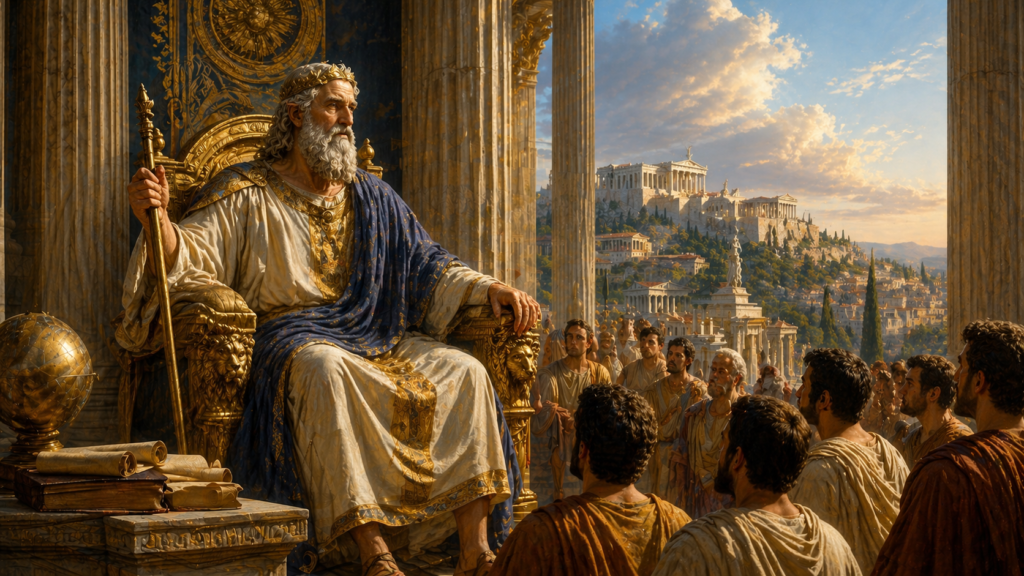
One of the most significant features of political thought is its historical character. Political ideas develop within specific historical contexts and reflect the social conditions of their time.
Ancient Greek political thought emerged in city-states where questions of citizenship and participation were central. Medieval political thought was deeply influenced by religion and the authority of the Church. Modern political thought developed alongside the rise of nation-states, capitalism, democracy, and industrialization.
The historical nature of political thought demonstrates that political ideas are not static. They evolve in response to changing political realities, technological advancements, social movements, and economic transformations.
Understanding political thought requires examining the historical circumstances that shaped particular ideas and theories. This historical perspective allows students to appreciate why different political thinkers emphasized different values and concerns.
Normative Orientation
Political thought is fundamentally normative. It seeks to determine how political life ought to be organized rather than merely describing how it actually operates.
Normative questions include:
- What is justice?
- What rights should individuals possess?
- What is the best form of government?
- How should political power be distributed?
Political thinkers often propose ideals and standards against which existing political systems can be evaluated. Plato envisioned an ideal state governed by philosopher-kings. Rousseau emphasized popular sovereignty and collective freedom. Rawls developed principles of justice to guide modern democratic societies.
This normative orientation distinguishes political thought from purely descriptive approaches. Political thought is concerned with values, ethics, and moral judgments regarding political arrangements.
Concern with the State and Government
Political thought places significant emphasis on the state and government. Political thinkers seek to understand the nature, purpose, and functions of political institutions.
Questions concerning the state include:
- Why does the state exist?
- What are its legitimate powers?
- What limits should be imposed on governmental authority?
Different political traditions offer different answers. Liberal thinkers emphasize limited government and individual rights. Socialist thinkers advocate state intervention to promote social equality. Conservative thinkers stress stability, tradition, and authority.
The analysis of state institutions remains a central feature of political thought because governments play a crucial role in maintaining order, delivering public services, and protecting citizens’ rights.
Focus on Power and Authority

Power is a central concept in political thought. Political thinkers examine how power is acquired, exercised, distributed, and controlled within society.
Political thought distinguishes between power and authority. Power refers to the ability to influence or control others, while authority involves legitimate power accepted by society.
Thinkers such as Niccolò Machiavelli explored the practical aspects of political power. Max Weber analyzed different forms of authority, including traditional, charismatic, and legal-rational authority. Michel Foucault examined how power operates through institutions and social practices.
Understanding power relations helps explain political behavior, leadership, governance, and social conflicts.
Relationship Between Individual and Society
Another key feature of political thought is its examination of the relationship between individuals and society.
Political thinkers debate questions such as:
- What rights do individuals possess?
- What obligations do citizens owe to society?
- How should individual freedom be balanced with social order?
Liberal thinkers prioritize individual liberty and personal autonomy. Communitarian thinkers emphasize social responsibilities and collective values. Socialist thinkers focus on social equality and economic justice.
The relationship between individuals and society remains a central issue because political systems must balance personal freedom with collective welfare.
Search for Justice
Justice is one of the most enduring concerns of political thought. Virtually every political thinker addresses questions related to fairness, rights, and the distribution of resources.
Political thought explores various dimensions of justice:
Distributive Justice
Concerns the fair allocation of wealth, opportunities, and resources within society.
Social Justice
Focuses on reducing inequalities and ensuring equal treatment for all individuals.
Legal Justice
Emphasizes equality before the law and impartial legal institutions.
Political Justice
Addresses equal participation in political processes and decision-making.
The pursuit of justice remains a guiding principle in political theory and public policy.
Interdisciplinary Character
Political thought is inherently interdisciplinary. It draws insights from several fields of knowledge, including:
- Philosophy
- Sociology
- Economics
- History
- Law
- Psychology
- Anthropology
Political thinkers often incorporate concepts from these disciplines to understand complex political phenomena. For example, Marx combined economics and political theory to analyze capitalism. Aristotle integrated ethics and politics. Contemporary political theorists use sociology and psychology to study political behavior.
This interdisciplinary nature enriches political thought and broadens its analytical scope.
Critical and Analytical Approach
Political thought encourages critical thinking and systematic analysis. Rather than accepting political institutions and practices unquestioningly, political thinkers evaluate their strengths and weaknesses.
Political thought challenges assumptions about:
- Authority
- Legitimacy
- Democracy
- Equality
- Rights
- Governance
Critical analysis allows citizens and scholars to identify problems within political systems and propose reforms. This feature makes political thought an essential tool for democratic participation and intellectual inquiry.
Idealism and Realism
Political thought often contains both idealistic and realistic elements.
Idealistic thinkers focus on how society should be organized according to moral principles and ethical values. Plato’s ideal state is an example of idealistic political thought.
Realistic thinkers emphasize practical political realities. Machiavelli argued that rulers must understand human nature and political circumstances rather than relying solely on moral ideals.
Most political theories combine elements of idealism and realism. Effective political thought seeks to balance ethical aspirations with practical considerations.
Universal and Contextual Dimensions
Political thought possesses both universal and contextual characteristics.
Certain political values such as justice, liberty, equality, and human dignity have universal significance. These values transcend national and cultural boundaries.
At the same time, political thought reflects specific social and historical contexts. Political ideas often emerge in response to particular challenges faced by societies.
For example, liberalism developed partly in response to absolute monarchy, while socialism emerged as a response to industrial capitalism and economic inequality.
The coexistence of universal principles and contextual influences makes political thought both globally relevant and historically grounded.
Dynamic and Evolving Nature
Political thought is not fixed or permanent. It evolves continuously in response to changing circumstances.
Major factors influencing the evolution of political thought include:
- Technological innovation
- Economic transformation
- Social movements
- Globalization
- Environmental challenges
- Cultural change
Contemporary political thought addresses issues that earlier thinkers could not have anticipated, including digital privacy, artificial intelligence, climate change, and global governance.
The dynamic nature of political thought ensures its continued relevance in addressing emerging political challenges.
Ideological Foundation
Political thought serves as the intellectual basis for political ideologies. Ideologies provide coherent systems of beliefs regarding political organization and public policy.
Major political ideologies include:
- Liberalism
- Conservatism
- Socialism
- Nationalism
- Feminism
- Environmentalism
Each ideology is rooted in specific political ideas and values developed through political thought. Understanding political thought helps students understand the origins and principles of these ideologies.
Guidance for Political Action
Political thought is not purely theoretical. It often seeks to guide political action and public policy.
Political ideas influence:
- Constitutional design
- Legal reforms
- Public administration
- Electoral systems
- Social welfare programs
- Human rights policies
For example, democratic theory has influenced electoral institutions worldwide, while ideas about social justice have shaped welfare policies in many countries.
The practical relevance of political thought demonstrates its importance beyond academic discussions.
Emphasis on Human Welfare
A fundamental feature of political thought is its concern for human welfare and social well-being.
Political thinkers seek to create conditions that promote:
- Peace
- Security
- Prosperity
- Freedom
- Equality
- Human development
Although different thinkers propose different methods for achieving these goals, the ultimate objective remains the improvement of human life and social conditions.
This humanitarian orientation gives political thought enduring significance and moral relevance.
Relevance of Political Thought in the Contemporary World
Political thought remains highly relevant in the twenty-first century. Contemporary societies face numerous challenges, including:
- Democratic decline
- Political polarization
- Economic inequality
- Climate change
- Migration
- Technological disruption
Political thought provides conceptual tools for understanding and addressing these issues. It helps policymakers, scholars, and citizens evaluate competing solutions and make informed political decisions.
Moreover, political thought promotes civic awareness and democratic participation by encouraging individuals to reflect critically on political institutions and public affairs.
Conclusion
Political thought is a rich and dynamic field that explores fundamental questions concerning power, authority, justice, freedom, equality, and governance. Its key features include its historical nature, normative orientation, focus on the state, concern with power, emphasis on justice, interdisciplinary character, critical approach, and practical relevance.
Political thought serves both as an intellectual framework for understanding political realities and as a guide for improving society. It bridges theory and practice by connecting philosophical ideals with real-world political challenges. As societies continue to evolve and confront new problems, political thought will remain an indispensable component of political science and democratic life.
For political science students, studying the key features of political thought provides valuable insights into the development of political ideas and their continuing influence on contemporary governance and public policy.
FAQs
1. What is Political Thought?
Political thought refers to the systematic study of ideas, theories, and principles related to politics, government, power, authority, justice, and the organization of society.
2. Why is Political Thought important?
Political thought helps us understand how political systems function, evaluate governments, and develop solutions to social and political problems.
3. What are the main features of Political Thought?
The main features of political thought include its normative nature, focus on power and authority, concern for justice, historical perspective, and emphasis on governance and human welfare.
4. How does Political Thought differ from Political Science?
Political thought primarily focuses on political ideas and values, whereas political science studies political institutions, behavior, and processes using empirical methods.
5. Who is known as the father of Political Thought?
Plato is often regarded as one of the founding figures of political thought due to his influential work on the ideal state and justice.
6. What is the relationship between Political Thought and political ideology?
Political thought provides the intellectual foundation for political ideologies such as liberalism, conservatism, socialism, and nationalism.
7. How does Political Thought contribute to democracy?
Political thought helps develop democratic principles such as liberty, equality, popular sovereignty, and citizen participation.
8. What role does justice play in Political Thought?
Justice is a central concern of political thought because it addresses fairness, rights, equality, and the proper distribution of resources in society.
9. Why is Political Thought considered normative?
Political thought is normative because it focuses on how political institutions and societies ought to function rather than merely describing existing conditions.
10. How has Political Thought evolved over time?
Political thought has evolved through different historical periods, adapting to social, economic, cultural, and technological changes.
11. What is the significance of power in Political Thought?
Power is a key concept in political thought because it determines how decisions are made, authority is exercised, and resources are distributed.
12. How does Political Thought influence public policy?
Political thought shapes public policy by providing ideas and principles related to governance, rights, welfare, justice, and social development.
13. What are some major traditions in Political Thought?
Major traditions in political thought include liberalism, conservatism, socialism, feminism, nationalism, and environmentalism.
14. How does Political Thought help students?
Political thought develops critical thinking, analytical skills, and a deeper understanding of political systems, institutions, and social issues.
15. What is the contemporary relevance of Political Thought?
Political thought remains relevant because it helps address modern challenges such as globalization, climate change, human rights, technological governance, and democratic reform.
2 thoughts on “Key Features of Political Thought”