Introduction
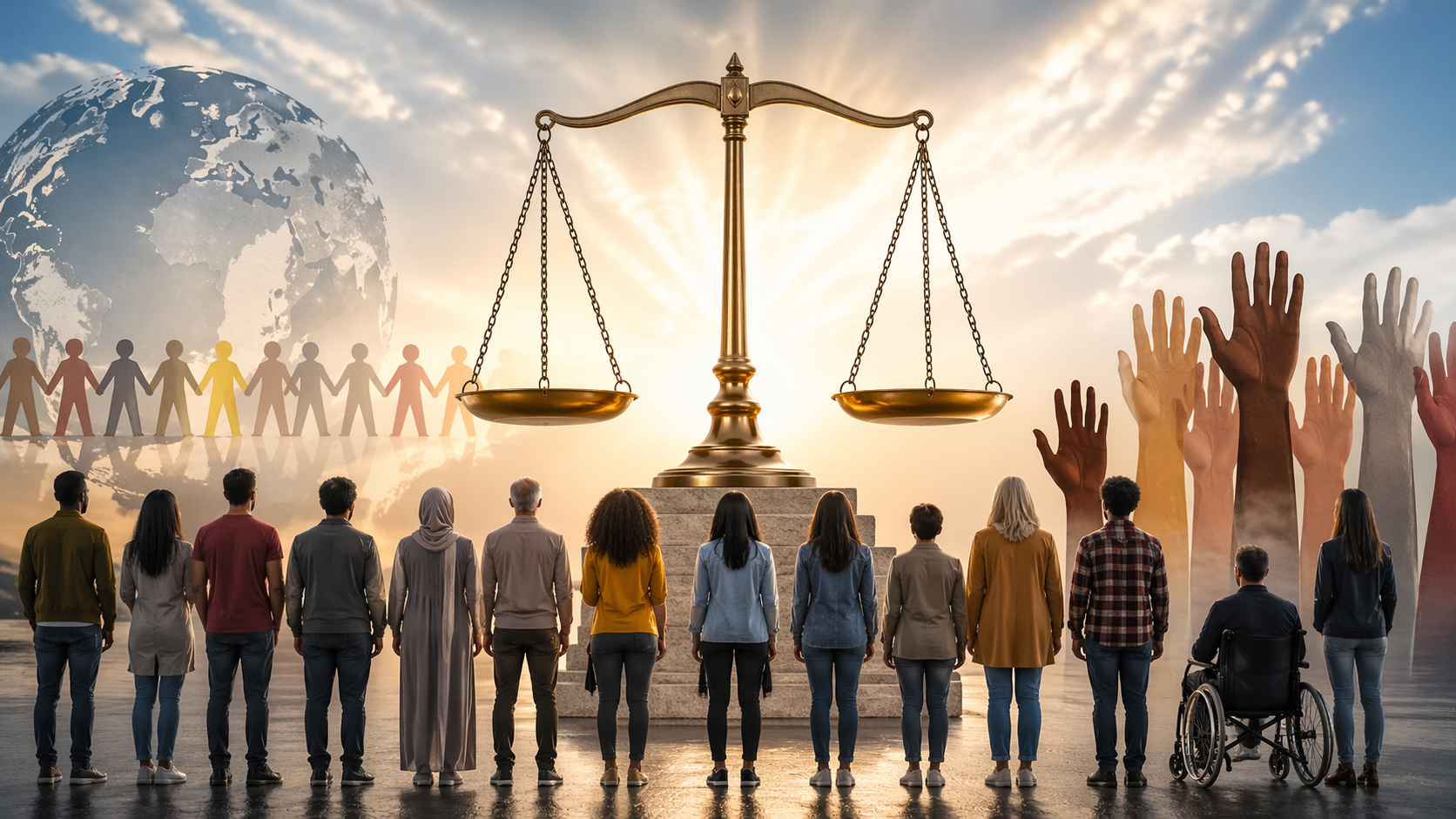
Equality is one of the most enduring and contested ideas in political theory. It lies at the heart of democratic thought, human rights discourse, and modern constitutionalism. From ancient philosophical reflections to contemporary policy debates, equality has evolved in meaning and application, shaped by historical contexts and ideological struggles. For political science students, understanding equality is essential not only for theoretical clarity but also for analyzing real-world issues such as poverty, gender justice, caste discrimination, and global inequality.
At its core, equality concerns how individuals and groups are treated within a society—whether they enjoy the same rights, opportunities, and outcomes, and how differences among people are recognized or accommodated. However, equality is not a simple or singular concept. It has multiple dimensions, interpretations, and practical implications that often conflict with each other.
This article explores the meaning of equality, its major types, and the contemporary debates surrounding it in political theory and practice.
Table of Contents
Meaning of Equality
Equality, in a general sense, refers to the idea that all human beings are of equal worth and deserve equal consideration and respect. It rejects arbitrary discrimination based on characteristics such as race, gender, caste, religion, or wealth.
However, equality does not necessarily mean that everyone should be identical in all respects. Human beings differ in talents, preferences, and circumstances. Thus, equality is better understood as a principle of fairness rather than sameness.
Two key aspects define the meaning of equality:
Moral Equality
Moral equality asserts that all individuals possess equal intrinsic value. This idea is rooted in philosophical traditions that emphasize human dignity. It forms the basis of modern human rights frameworks.
Political Equality
Political equality refers to equal participation in political processes. This includes equal voting rights, equal access to public office, and equal representation.
The idea of equality gained prominence during the Enlightenment and was institutionalized through major historical events such as the French Revolution and the American Revolution, which challenged hierarchical systems and promoted the idea that “all men are created equal.”
Types of Equality
Equality is a multidimensional concept. Political theorists distinguish between different types of equality to clarify its application in society.
1. Legal Equality
Legal equality means that all individuals are equal before the law and entitled to equal protection of the law. It rejects special privileges based on birth or status.
In modern democracies, legal equality is a fundamental principle embedded in constitutions. It ensures that laws apply uniformly to all citizens, regardless of their social position.
However, legal equality alone does not guarantee real equality, as individuals may still face structural disadvantages.
2. Political Equality
Political equality refers to equal rights to participate in political decision-making. It includes:
- Universal adult franchise
- Equal voting power
- Equal opportunity to contest elections
Political equality is essential for democracy, as it ensures that every citizen has a voice in governance.
Yet, in practice, political equality can be undermined by factors such as wealth inequality, media influence, and political corruption.
3. Social Equality
Social equality involves the absence of social hierarchies and discrimination. It seeks to eliminate inequalities based on caste, race, gender, and other social identities.
In societies like India, social equality is closely linked to the struggle against caste discrimination. The Constitution of India promotes social equality through provisions such as affirmative action and anti-discrimination laws.
Social equality is not just about legal provisions but also about changing social attitudes and practices.
4. Economic Equality
Economic equality concerns the distribution of wealth, income, and resources in society. It addresses disparities that arise from unequal access to economic opportunities.
Two main perspectives exist:
- Equality of outcome: Everyone should have similar levels of income and wealth.
- Equality of opportunity: Everyone should have a fair chance to succeed, but outcomes may differ.
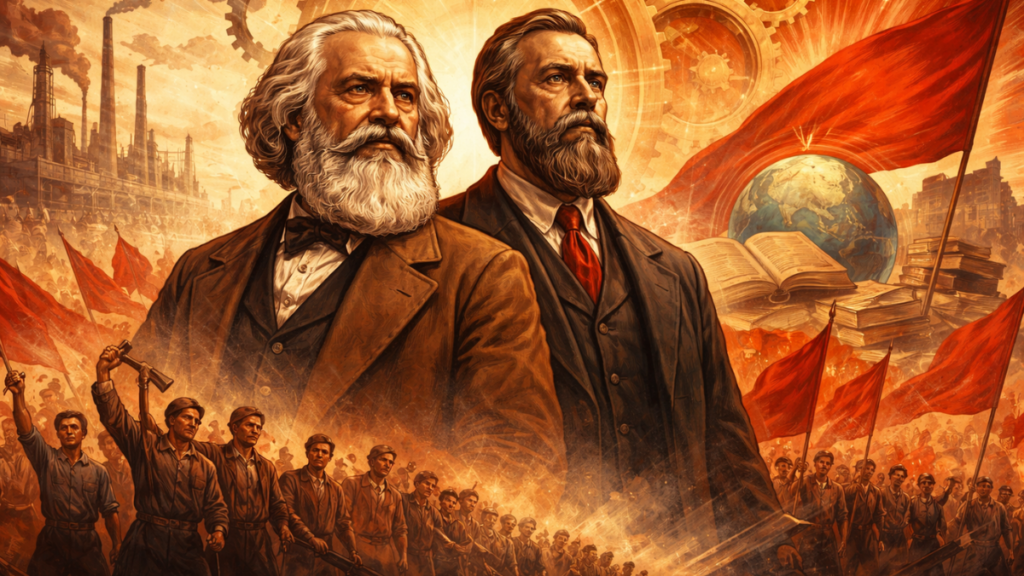
Thinkers like Karl Marx emphasized the need for economic equality by advocating the abolition of class divisions. In contrast, liberal thinkers accept some level of inequality as an incentive for productivity.
5. Equality of Opportunity
Equality of opportunity ensures that individuals have the same starting point in life. It focuses on removing barriers such as poverty, discrimination, and lack of education.
For example, access to quality education and healthcare is essential for achieving equality of opportunity.
However, critics argue that equal opportunity is insufficient if structural inequalities persist.
6. Equality of Outcome
Equality of outcome aims to reduce disparities in the final distribution of resources and benefits. It often involves redistributive policies such as taxation, welfare programs, and subsidies.
While this approach promotes social justice, it raises concerns about efficiency and individual motivation.
7. Substantive Equality
Substantive equality goes beyond formal equality (equal laws) to address real-life inequalities. It recognizes that different individuals may need different support to achieve fairness.
For instance, policies like reservations or quotas aim to uplift historically disadvantaged groups.
Substantive equality is particularly relevant in diverse societies with deep-rooted inequalities.
Philosophical Perspectives on Equality
Different political ideologies interpret equality in distinct ways:
Liberal Perspective
Liberalism emphasizes equality of opportunity and individual rights. Thinkers like John Rawls argued for “justice as fairness,” where inequalities are acceptable only if they benefit the least advantaged.
Marxist Perspective
Marxism advocates for economic equality and the abolition of class distinctions. It views inequality as a result of capitalist exploitation.
Feminist Perspective
Feminist theorists focus on gender equality, highlighting systemic discrimination against women and marginalized genders.
Capability Approach
Developed by Amartya Sen, this approach emphasizes individuals’ capabilities to achieve meaningful lives rather than just income equality.
Contemporary Debates on Equality
Equality remains a central issue in modern political discourse. Several debates highlight its complexity and relevance.
1. Equality vs Liberty
One of the most enduring debates is the tension between equality and liberty.
- Too much emphasis on equality may restrict individual freedom.
- Too much emphasis on liberty may lead to inequality.
Balancing these values is a key challenge for policymakers.
2. Identity Politics and Recognition
Contemporary politics increasingly focuses on identity-based inequalities related to race, gender, sexuality, and ethnicity.
Movements for recognition argue that equality requires acknowledging and respecting differences, not just treating everyone the same.
3. Global Inequality
In a globalized world, inequality is not limited to nations but extends across them.
- Developed countries enjoy higher living standards.
- Developing countries struggle with poverty and limited resources.
Global institutions and policies are often criticized for perpetuating inequality.
4. Digital Divide
Technological advancements have created new forms of inequality.
Access to the internet, digital literacy, and technological resources determine opportunities in education, employment, and communication.
Bridging the digital divide is crucial for achieving equality in the 21st century.
5. Affirmative Action
Affirmative action policies aim to correct historical injustices by providing preferential treatment to disadvantaged groups.
While supporters view it as necessary for substantive equality, critics argue that it may lead to reverse discrimination.
6. Gender Equality
Gender inequality remains a major issue worldwide.
- Wage gaps
- Underrepresentation in leadership
- Gender-based violence
Efforts to promote gender equality include legal reforms, education, and social movements.
7. Environmental Justice
Environmental issues have introduced a new dimension to equality.
Marginalized communities often bear the brunt of environmental degradation and climate change.
The concept of environmental justice emphasizes fair distribution of environmental benefits and burdens.
8. Inequality in the Age of Capitalism
Modern capitalism has led to significant wealth concentration.
A small percentage of the population controls a large share of global wealth, raising concerns about economic and political power imbalances.
Debates continue over taxation, welfare policies, and corporate regulation.
Equality in the Indian Context
India presents a unique case for studying equality due to its diversity and historical inequalities.
Constitutional Provisions
The Indian Constitution guarantees equality through:
- Article 14: Equality before law
- Article 15: Prohibition of discrimination
- Article 16: Equal opportunity in public employment
Challenges
Despite legal provisions, India faces challenges such as:
- Caste-based discrimination
- Gender inequality
- Regional disparities
- Economic inequality
Measures
Policies like reservations, welfare schemes, and social reforms aim to address these issues.
Criticisms of Equality
While equality is widely accepted as a desirable goal, it faces several criticisms:
- Impracticality: Complete equality is difficult to achieve due to natural differences.
- Efficiency Concerns: Excessive redistribution may reduce economic incentives.
- Ambiguity: Different interpretations of equality create confusion.
These criticisms highlight the need for a balanced and context-specific approach.
Conclusion
Equality is a foundational principle of political theory and democratic governance. It embodies the ideal of fairness, justice, and human dignity. However, equality is not a fixed or uniform concept. It encompasses multiple dimensions—legal, political, social, and economic—each with its own complexities.
The challenge lies in translating the ideal of equality into practical policies that address real-world inequalities without undermining other values such as liberty and efficiency. Contemporary debates on identity, globalization, technology, and environmental justice demonstrate that equality remains a dynamic and evolving concept.
For political science students, understanding equality requires not only theoretical knowledge but also critical engagement with ongoing social and political developments. As societies continue to change, the pursuit of equality will remain central to the quest for a just and inclusive world.
2 thoughts on “Equality: Meaning, Types and Contemporary Debates”