Introduction
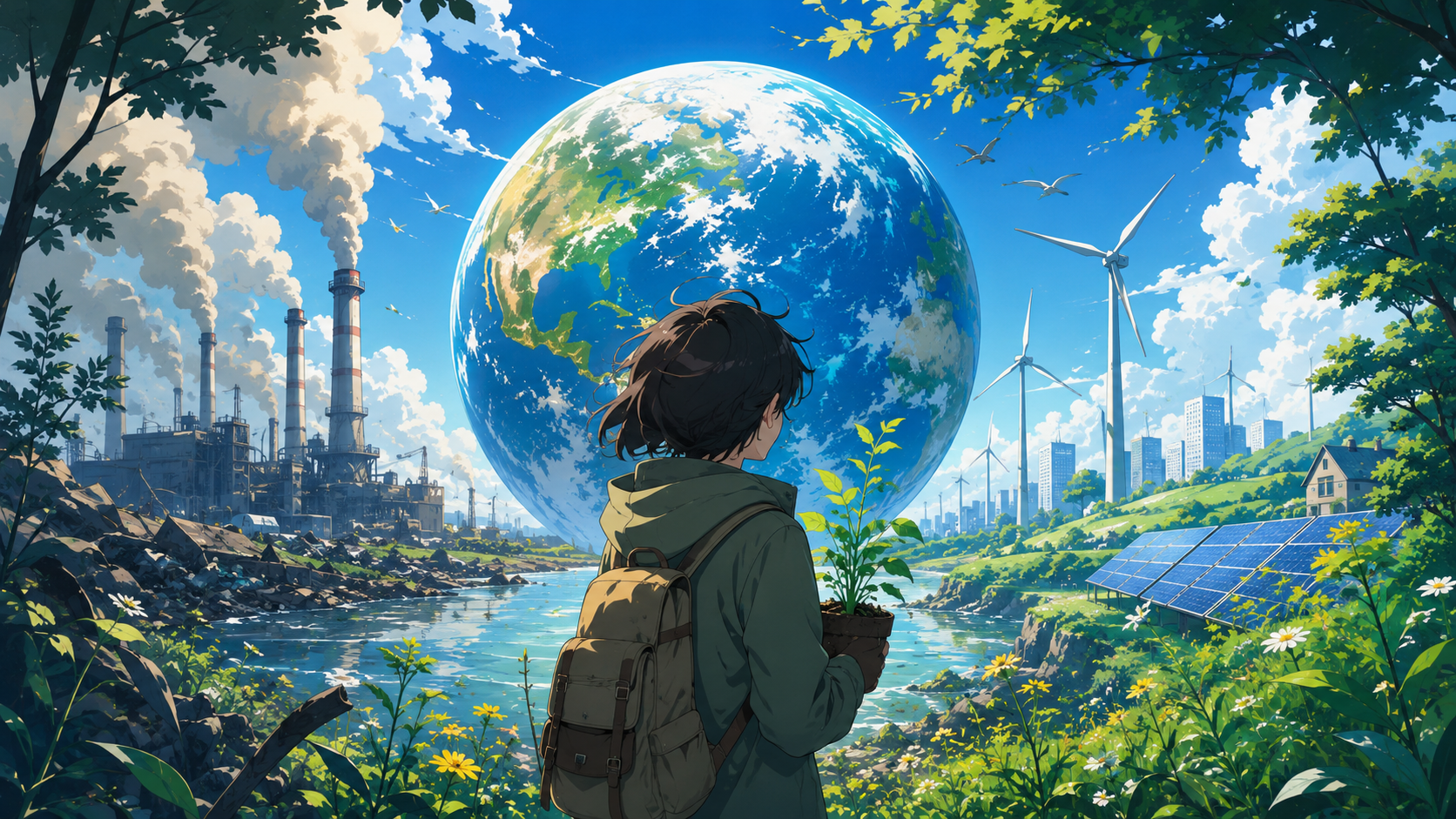
Environmentalism and Green Political Thought have emerged as some of the most significant intellectual and political developments of the modern era. As humanity faces climate change, biodiversity loss, pollution, deforestation, and resource depletion, traditional political ideologies such as liberalism, conservatism, socialism, and nationalism have increasingly been challenged to address ecological concerns. Green political thought represents an attempt to rethink politics, economics, and society from an ecological perspective.
Environmentalism is both a social movement and a philosophical approach that seeks to protect the natural environment and promote sustainable relationships between human beings and nature. Green political thought extends these concerns into the political sphere by questioning existing patterns of economic growth, industrial development, and political decision-making.
The rise of environmental politics has transformed public policy, international relations, economic planning, and social movements across the world. Today, environmental issues are no longer confined to scientific discussions; they are central to debates about justice, development, democracy, and the future of civilization itself.

Table of Contents
Understanding Environmentalism
Environmentalism refers to the belief that human activities have significant impacts on the natural environment and that societies must take active measures to protect ecosystems and natural resources. Environmentalists advocate policies and practices that reduce environmental degradation and promote sustainability.
The roots of environmentalism can be traced to the nineteenth century when industrialization led to extensive pollution and destruction of natural landscapes. Thinkers, writers, and conservationists began expressing concerns about the harmful effects of rapid industrial growth.
In the twentieth century, environmentalism developed into a global movement. Scientific evidence about pollution, nuclear hazards, and ecological degradation increased public awareness. Books such as Rachel Carson’s Silent Spring played a crucial role in exposing environmental dangers and mobilizing public opinion.
Modern environmentalism encompasses a wide range of concerns, including climate change, air and water pollution, renewable energy, wildlife conservation, sustainable agriculture, waste management, and environmental justice.
Emergence of Green Political Thought

Green political thought developed during the late twentieth century as environmental concerns became increasingly prominent. It is not merely an environmental policy agenda but a comprehensive political philosophy.
Green theorists argue that many environmental problems arise from dominant economic and political systems that prioritize unlimited growth and consumption. They contend that existing political ideologies often treat nature as a resource to be exploited rather than as a complex system upon which human survival depends.
Green political thought challenges anthropocentrism—the belief that humans are the most important entities in the world. Instead, it promotes ecological perspectives that recognize the intrinsic value of non-human life and ecosystems.
The emergence of Green parties in Europe during the 1970s and 1980s reflected the growing influence of environmental concerns in electoral politics. Since then, Green movements have spread globally and have influenced mainstream political agendas.
Core Principles of Green Political Thought
Green political thought is based on several interconnected principles.
Ecological Sustainability
Ecological sustainability is the foundation of Green politics. It emphasizes maintaining ecological balance and ensuring that natural resources are used in ways that do not compromise future generations.
Green theorists argue that economic development should occur within ecological limits. Sustainable development seeks to meet present needs without undermining the ability of future generations to meet their own needs.
Respect for Nature
Green political thought recognizes the intrinsic value of nature. Forests, rivers, animals, and ecosystems are not merely resources for human use but possess value in their own right.
This perspective challenges traditional human-centered approaches and encourages ethical responsibility toward all forms of life.
Social Justice

Environmental problems often affect disadvantaged communities more severely than affluent groups. Green politics therefore emphasizes environmental justice.
Issues such as pollution, climate vulnerability, and unequal access to natural resources are closely linked to social inequality. Green thinkers advocate fair distribution of environmental benefits and burdens.
Grassroots Democracy
Green political thought promotes decentralized decision-making and citizen participation. Local communities are viewed as important actors in environmental governance.
Grassroots democracy seeks to empower ordinary citizens and reduce excessive concentration of political power.
Nonviolence
Many Green movements embrace nonviolence as a political principle. They advocate peaceful methods of social and political change and oppose militarism and war.
Environmental destruction and armed conflicts often reinforce one another, making peace an important component of ecological sustainability.
Major Thinkers in Green Political Thought
Several influential thinkers have shaped Green political philosophy.
Henry David Thoreau
Thoreau emphasized simplicity, self-reliance, and close relationships with nature. His writings inspired later environmental movements and ecological thinking.
Aldo Leopold
Leopold developed the concept of a “land ethic,” arguing that humans should view themselves as members of a broader ecological community rather than masters of nature.
Rachel Carson
Rachel Carson exposed the ecological consequences of pesticide use and helped launch the modern environmental movement. Her work demonstrated the interconnectedness of ecological systems.
Arne Naess
Naess is best known for developing Deep Ecology. He argued that all living beings possess intrinsic value and that humans should radically reconsider their relationship with nature.
Murray Bookchin
Bookchin developed Social Ecology, which links environmental problems to social hierarchies and systems of domination. He argued that ecological sustainability requires democratic and egalitarian social structures.
Deep Ecology and Shallow Ecology
One of the most important debates within Green political thought concerns the distinction between Deep Ecology and Shallow Ecology.
Shallow Ecology focuses on solving environmental problems primarily to improve human welfare. It supports pollution control, conservation, and efficient resource management.
Deep Ecology goes further by questioning the human-centered worldview. It argues that all forms of life have equal moral worth and that humanity must fundamentally transform its relationship with nature.
Deep ecologists advocate reduced consumption, simpler lifestyles, and recognition of ecological interconnectedness.
Social Ecology
Social Ecology emerged as an influential strand of Green thought. Developed by Murray Bookchin, it argues that environmental crises are rooted in social and political inequalities.
According to Social Ecology, domination of nature is closely linked to domination of human beings. Hierarchical social systems encourage exploitative attitudes toward both people and the environment.
Bookchin proposed decentralized democracy, community participation, and ecological urban planning as solutions to environmental challenges.
Ecofeminism
Ecofeminism explores the connections between environmental degradation and gender inequality.
Ecofeminists argue that patriarchal structures have historically contributed to both the oppression of women and the exploitation of nature. They suggest that values associated with care, cooperation, and sustainability should replace domination and control.
Prominent ecofeminist thinkers have emphasized the need to challenge social systems that marginalize both women and the environment.
Ecofeminism has enriched Green political thought by highlighting the intersection of ecological and social justice concerns.
Green Parties and Political Movements
The rise of Green parties represents one of the most visible expressions of Green political thought.
Green parties emerged in many countries during the late twentieth century. Their platforms typically focus on environmental protection, renewable energy, sustainable development, social justice, and democratic participation.
In countries such as Germany, Green parties have become significant political actors and have participated in government coalitions.
Environmental movements have also influenced international organizations, non-governmental organizations, and civil society campaigns. Activism around climate change, biodiversity conservation, and renewable energy has transformed public discourse worldwide.
Environmentalism and Sustainable Development
The concept of sustainable development has become central to environmental politics.
Sustainable development seeks to balance economic growth, social welfare, and environmental protection. It recognizes that environmental sustainability and human development are interconnected.
The concept gained international prominence through the 1987 Brundtland Report, which defined sustainable development as development that meets present needs without compromising future generations.
Green thinkers generally support sustainability but often criticize interpretations that prioritize economic growth over ecological integrity.
Environmental Justice
Environmental justice addresses the unequal distribution of environmental risks and benefits.
Marginalized communities frequently experience higher levels of pollution, inadequate access to clean water, and greater vulnerability to environmental disasters.
Environmental justice movements seek equitable environmental policies and greater participation of affected communities in decision-making processes.
This perspective has broadened environmentalism beyond conservation issues to include questions of race, class, gender, and human rights.
Climate Change and Green Politics
Climate change has become the defining environmental issue of the twenty-first century.
Green political thought provides important insights into climate governance. Green theorists argue that addressing climate change requires fundamental transformations in energy systems, economic structures, and consumption patterns.
Policies advocated by Green movements include renewable energy expansion, carbon reduction strategies, sustainable transportation, and international cooperation.
Climate change has reinforced the relevance of Green politics by demonstrating the global consequences of ecological disruption.
Criticisms of Green Political Thought
Despite its growing influence, Green political thought faces several criticisms.
Some critics argue that Green policies may hinder economic growth and technological progress. They contend that strict environmental regulations can impose costs on industries and consumers.
Others claim that Green politics sometimes lacks practical solutions for balancing environmental protection with development needs, particularly in developing countries.
Certain critics view Deep Ecology as excessively idealistic and difficult to implement in modern societies.
There are also debates regarding the extent to which environmental sustainability can be achieved within capitalist economic systems.
Nevertheless, Green political thought continues to evolve and respond to these criticisms through new theoretical and policy innovations.
Environmentalism in the Global South
Environmental issues in developing countries often differ from those in industrialized nations.
In many parts of Asia, Africa, and Latin America, environmental concerns are closely linked to poverty, livelihood security, and access to resources. Communities dependent on forests, rivers, and agriculture often face direct consequences of environmental degradation.
Green political thought in the Global South frequently emphasizes environmental justice, indigenous rights, and sustainable development.
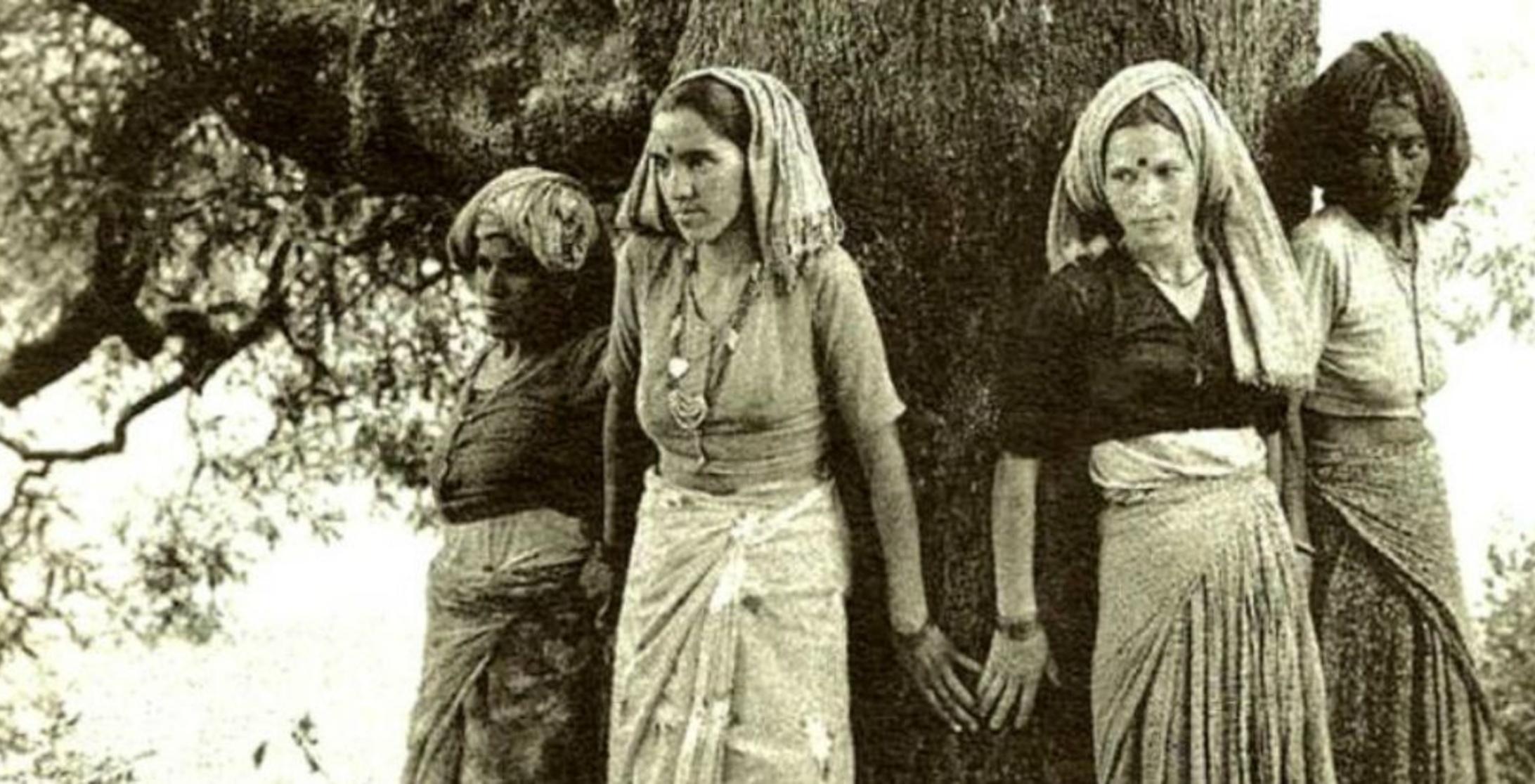
Movements such as the Chipko Movement in India demonstrate how environmental activism can be connected to social and economic concerns.
Relevance of Green Political Thought in the Twenty-First Century
The twenty-first century presents unprecedented environmental challenges. Climate change, biodiversity loss, plastic pollution, and resource scarcity threaten ecological stability and human well-being.
Green political thought offers valuable frameworks for understanding these challenges. It encourages societies to rethink development models, consumption patterns, and political institutions.
The increasing prominence of environmental issues in elections, public policy, and international agreements highlights the growing relevance of Green politics.
Young people around the world have become active participants in environmental movements, demonstrating widespread concern for ecological sustainability and intergenerational justice.
Conclusion
Environmentalism and Green Political Thought have transformed contemporary political discourse by placing ecological concerns at the center of political analysis. Unlike traditional ideologies that often prioritize economic growth or state power, Green political thought emphasizes sustainability, ecological balance, social justice, and democratic participation.
Through concepts such as Deep Ecology, Social Ecology, Ecofeminism, environmental justice, and sustainable development, Green thinkers have developed comprehensive critiques of existing political and economic systems. Their ideas challenge humanity to recognize its interconnectedness with the natural world and to adopt more sustainable forms of living.
As environmental challenges continue to intensify, Green political thought is likely to remain an essential area of study within Political Science. Its insights provide valuable guidance for addressing some of the most pressing issues facing humanity and for building a more sustainable and equitable future.
FAQs
1. What is Environmentalism?
Environmentalism is a social and political movement that seeks to protect the natural environment from pollution, resource depletion, and ecological destruction. It promotes sustainable practices and environmental conservation.
2. What is Green Political Thought?
Green Political Thought is a political philosophy that emphasizes ecological sustainability, social justice, grassroots democracy, and respect for nature. It seeks to address environmental problems through political and social change.
3. How is Green Political Thought different from traditional political ideologies?
Unlike traditional ideologies that often prioritize economic growth or state power, Green Political Thought focuses on ecological balance, sustainable development, and the long-term health of the planet.
4. What are the main principles of Green Political Thought?
The core principles include ecological sustainability, environmental justice, respect for nature, grassroots democracy, nonviolence, and social responsibility.
5. Who is considered the founder of Deep Ecology?
Norwegian philosopher Arne Naess is widely regarded as the founder of Deep Ecology, a philosophy that recognizes the intrinsic value of all living beings.
6. What is the difference between Deep Ecology and Shallow Ecology?
Deep Ecology argues that all forms of life have intrinsic value and calls for fundamental changes in human behavior. Shallow Ecology focuses mainly on solving environmental problems to improve human welfare.
7. What is Social Ecology?
Social Ecology is a branch of Green Political Thought developed by Murray Bookchin. It argues that environmental problems are rooted in social hierarchies and inequalities.
8. What is Ecofeminism?
Ecofeminism is a theory that links environmental degradation with gender inequality. It argues that the domination of nature and the oppression of women are interconnected.
9. Why is sustainable development important in Green Politics?
Sustainable development aims to meet present needs without compromising the ability of future generations to meet their own needs, ensuring a balance between economic growth and environmental protection.
10. What is environmental justice?
Environmental justice refers to the fair distribution of environmental benefits and burdens. It seeks to protect marginalized communities from disproportionate exposure to pollution and environmental hazards.
11. How do Green Parties contribute to environmental protection?
Green Parties advocate policies such as renewable energy, climate action, biodiversity conservation, sustainable transportation, and stronger environmental regulations.
12. What role does climate change play in Green Political Thought?
Climate change is a central concern of Green Political Thought because it highlights the consequences of unsustainable economic practices and the need for global environmental cooperation.
13. How does Green Political Thought view economic growth?
Many Green theorists argue that unlimited economic growth is unsustainable on a finite planet. They advocate development models that respect ecological limits and prioritize sustainability.
14. What is the significance of Rachel Carson in Environmentalism?
Rachel Carson is known for her book Silent Spring, which exposed the dangers of pesticides and helped inspire the modern environmental movement.
15. Why is Environmentalism important in the 21st century?
Environmentalism is crucial today because the world faces major ecological challenges such as climate change, biodiversity loss, pollution, deforestation, and resource scarcity. It provides solutions for creating a sustainable future.