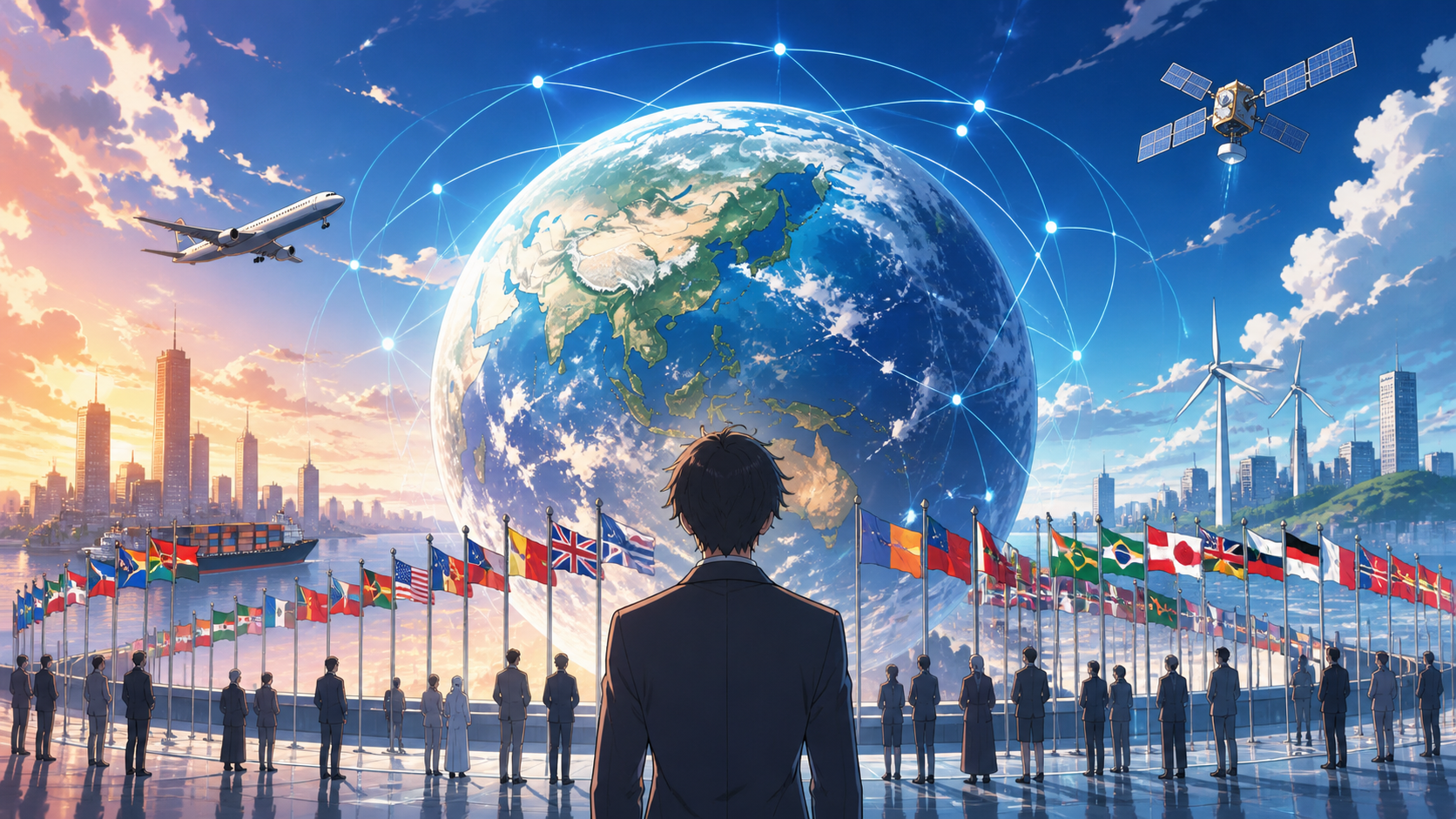
Introduction on Changing Nature of Sovereignty
Sovereignty has long been regarded as the defining feature of the modern state system. Rooted in the principles established after the Peace of Westphalia, sovereignty traditionally implies that a state possesses supreme authority within its territorial boundaries and is free from external interference. However, the rise of globalization in the late twentieth and early twenty-first centuries has profoundly transformed this classical understanding.
Globalization—characterized by the rapid flow of goods, capital, people, information, and ideas across borders—has not eliminated sovereignty, but it has reshaped its meaning, practice, and limitations. For political science students, understanding this transformation is essential to analyzing contemporary international relations, governance structures, and state power.
Table of Contents
Understanding Sovereignty: Classical Foundations
The traditional concept of sovereignty is closely associated with thinkers like Jean Bodin and later Thomas Hobbes, who emphasized absolute authority of the state. Sovereignty was understood in two main dimensions:
- Internal sovereignty: The state’s authority over its domestic affairs.
- External sovereignty: The state’s independence from external control.
This Westphalian model created a system of formally equal states, each governing its own territory without interference. For centuries, this concept dominated political theory and international law.
The Emergence of Globalization
Globalization gained momentum after World War II and accelerated with technological advancements, neoliberal economic policies, and institutional developments. Institutions like the International Monetary Fund, World Bank, and World Trade Organization played a major role in integrating national economies into a global system.
Globalization is not merely economic—it is multidimensional, involving political, cultural, and technological transformations. These changes have significantly affected how sovereignty is exercised.
Economic Globalization and Sovereignty
One of the most significant impacts of globalization on sovereignty is in the economic domain. States today operate within a highly interconnected global economy where decisions made in one country can affect others instantly.

Constraints on Economic Policy
Global markets limit the ability of states to pursue independent economic policies. For example:
- Capital mobility restricts governments from imposing high taxes or strict regulations.
- Trade agreements reduce tariffs and limit protectionist measures.
- International institutions impose conditions on loans and financial assistance.
Developing countries, in particular, often experience reduced economic autonomy due to dependency on global financial institutions.
Rise of Multinational Corporations
Multinational corporations (MNCs) have emerged as powerful actors in global politics. Companies like Apple Inc. and Amazon operate across multiple jurisdictions, often influencing state policies.
These corporations can:
- Negotiate favorable tax regimes
- Influence labor laws
- Shift production to countries with lower costs
This reduces the traditional control states have over their own economies.
Political Globalization and Shared Sovereignty
Political globalization refers to the growing importance of international organizations, regional bodies, and global governance mechanisms.

International Organizations
Organizations such as the United Nations play a crucial role in shaping global norms and policies. Member states often agree to abide by international laws, treaties, and conventions.
While participation is voluntary, compliance becomes necessary for legitimacy and cooperation. This creates a situation where sovereignty is shared rather than absolute.
Regional Integration
Regional organizations like the European Union represent a deeper level of sovereignty transformation. Member states of the EU have transferred significant powers to supranational institutions.
For example:
- Common currency (Euro)
- Shared legal systems
- Free movement of people
This represents a shift from traditional sovereignty to pooled sovereignty, where states collectively exercise authority.
Cultural Globalization and Identity
Globalization has also impacted cultural sovereignty. The spread of global media, communication technologies, and cultural products has led to the diffusion of ideas and lifestyles across borders.
Homogenization vs. Hybridization
Critics argue that globalization leads to cultural homogenization, often dominated by Western influences. For instance, global media networks like Netflix shape cultural consumption worldwide.
However, others argue that globalization creates hybrid cultures, where local traditions interact with global influences to produce new cultural forms.
Impact on National Identity
Cultural globalization can challenge national identity, which is often a key component of sovereignty. Governments may attempt to regulate media and cultural flows to preserve national identity, but such efforts are increasingly difficult.
Technological Globalization and Digital Sovereignty
The digital revolution has introduced new challenges to sovereignty.
Borderless Communication
The internet has created a borderless space where information flows freely. Platforms like Meta Platforms and Google operate globally, often beyond the full control of any single government.
Cybersecurity and Data Control
States are now concerned with:
- Data privacy
- Cybersecurity
- Control over digital infrastructure
This has led to the concept of digital sovereignty, where states seek to regulate cyberspace within their jurisdiction.
Countries like China have developed strong digital controls, while others advocate for an open internet, reflecting different approaches to sovereignty in the digital age.
Globalization and Human Rights
Globalization has strengthened the global human rights regime, which can limit state sovereignty.
International Norms
Organizations like the Amnesty International and international courts promote universal human rights standards. States are increasingly held accountable for their domestic actions.
Responsibility to Protect (R2P)
The doctrine of Responsibility to Protect challenges traditional sovereignty by asserting that the international community has a duty to intervene when a state fails to protect its citizens from atrocities.
This shifts sovereignty from being a right to a responsibility.
The Debate: Decline or Transformation of Sovereignty?
Scholars differ in their interpretations of globalization’s impact on sovereignty.
Hyperglobalists
Hyperglobalists argue that globalization has significantly weakened the state. According to this view:
- Economic forces dominate political decisions
- National borders are becoming irrelevant
- Sovereignty is declining
Skeptics
Skeptics contend that states remain powerful and central actors. They argue:
- States still control military and legal authority
- Globalization is not new but a continuation of historical processes
- Sovereignty is intact, though adapted
Transformationalists
Transformationalists offer a middle ground, suggesting that sovereignty is being redefined rather than eroded. They emphasize:
- The emergence of new forms of governance
- Increased interdependence
- The changing role of the state
Case Studies of Changing Sovereignty
India
India maintains strong political sovereignty but participates actively in global trade and institutions. Its policies reflect a balance between national interests and global integration.
China
China presents a model of controlled globalization. While deeply integrated into the global economy, it maintains strict political and digital sovereignty.
European Union
The EU exemplifies pooled sovereignty, where member states voluntarily share authority for collective benefits.
Challenges to Sovereignty in the Global Era
Several contemporary issues highlight the changing nature of sovereignty:
- Climate change requires global cooperation beyond national boundaries
- Pandemics like COVID-19 demonstrate the limits of national responses
- Migration challenges border control and national policies
- Terrorism operates across borders, requiring international collaboration
These challenges show that sovereignty alone is insufficient to address global problems.
The Future of Sovereignty
Sovereignty is unlikely to disappear, but it will continue to evolve. Future trends may include:
- Greater emphasis on networked governance
- Increased role of non-state actors
- Expansion of digital sovereignty frameworks
- Continued tension between nationalism and globalization
States will need to adapt to a world where power is more diffuse and interconnected.
Conclusion
Globalization has fundamentally altered the traditional concept of sovereignty. While the Westphalian model emphasized absolute authority and independence, the contemporary world is characterized by interdependence, shared governance, and complex global networks.
Rather than marking the end of sovereignty, globalization has transformed it into a more flexible and dynamic concept. States are no longer the sole actors in global politics, but they remain essential players navigating an increasingly interconnected world.
For political science students, the key is not to view sovereignty as declining, but as evolving—reshaped by economic forces, political institutions, cultural exchanges, and technological advancements. Understanding this transformation is crucial for analyzing modern governance and international relations in the twenty-first century.
FAQs
- What is meant by the Changing Nature of Sovereignty?
The Changing Nature of Sovereignty refers to how traditional state authority is being reshaped due to globalization, international institutions, and transnational actors. - How has globalization influenced the Changing Nature of Sovereignty?
Globalization has reduced absolute state control by increasing economic interdependence, cross-border flows, and international cooperation. - Why is the Changing Nature of Sovereignty important in political science?
It helps scholars understand how state power is evolving in response to global challenges and interconnected governance systems. - Does the Changing Nature of Sovereignty mean states are losing power?
Not entirely. States are adapting and sharing authority rather than completely losing sovereignty. - What role do international organizations play in the Changing Nature of Sovereignty?
Organizations like the United Nations influence state policies, leading to shared or pooled sovereignty. - How do multinational corporations affect the Changing Nature of Sovereignty?
They influence national policies and economic decisions, reducing the state’s independent control over its economy. - What is digital sovereignty in the Changing Nature of Sovereignty?
Digital sovereignty refers to a state’s ability to control data, cyberspace, and digital infrastructure within its territory. - How does the Changing Nature of Sovereignty relate to human rights?
Global human rights norms limit state authority by holding governments accountable to international standards. - Is the Changing Nature of Sovereignty the same in all countries?
No, it varies depending on political systems, economic strength, and levels of global integration. - How does regional integration impact the Changing Nature of Sovereignty?
Regional bodies like the European Union promote pooled sovereignty among member states. - What is pooled sovereignty in the Changing Nature of Sovereignty?
It refers to states voluntarily sharing authority with supranational institutions for mutual benefit. - How does technology shape the Changing Nature of Sovereignty?
Technology creates borderless communication and challenges state control over information and security. - What challenges arise from the Changing Nature of Sovereignty?
Issues like climate change, cyber threats, and global pandemics require cooperation beyond national borders. - Can sovereignty coexist with globalization?
Yes, but it becomes more flexible and interdependent rather than absolute. - What is the future of the Changing Nature of Sovereignty?
Sovereignty will continue evolving, with increased global cooperation, digital governance, and shared authority structures.