
Liberty is one of the most important ideas in political thought and political philosophy. Throughout history, philosophers, revolutionaries, and political thinkers have debated the meaning, scope, and significance of liberty in human society. The concept of liberty is closely connected with democracy, human rights, justice, equality, and the dignity of individuals. In political science, liberty is not merely the absence of restrictions; it is also the condition that enables human beings to develop their personality, express their opinions, and participate in social and political life.
The idea of liberty has evolved over time. Ancient thinkers viewed liberty differently from modern philosophers. In the modern democratic world, liberty has become a fundamental principle of constitutional government. Every democratic constitution guarantees certain freedoms to citizens because liberty is considered essential for human progress and social harmony.
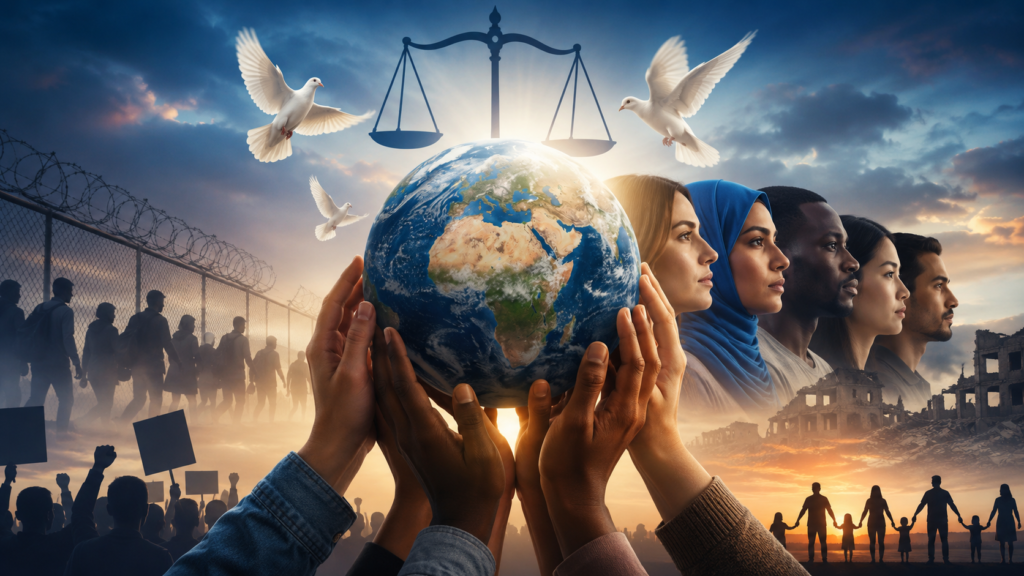
This article discusses the meaning and major features of liberty in political thought, along with the perspectives of important political thinkers and the relevance of liberty in contemporary society.
Meaning of Liberty
The term liberty is derived from the Latin word liber, which means free. In political thought, liberty refers to the freedom of individuals to act, think, and live according to their own choices without unnecessary interference from others or the state.
However, liberty does not mean absolute freedom. Unlimited freedom may create disorder and harm the freedom of others. Therefore, political thinkers emphasize that liberty should exist within a framework of law and social responsibility.
According to John Locke, liberty means freedom from arbitrary authority. Jean-Jacques Rousseau believed that true liberty exists when people obey laws that they themselves create through the general will. John Stuart Mill emphasized individual liberty and argued that society should interfere with individual actions only when they harm others.
Thus, liberty can be understood as a condition in which individuals enjoy freedom while respecting the rights and freedoms of others.
Historical Development of Liberty
The concept of liberty has passed through several stages of development.
Liberty in Ancient Political Thought
In ancient Greece, liberty was associated with participation in public affairs. Citizens enjoyed political freedom through direct participation in the governance of the city-state. However, women, slaves, and foreigners were excluded from political rights.
Aristotle viewed liberty as participation in political life and obedience to rational laws. Ancient liberty was therefore collective rather than individual.
Liberty in Medieval Thought
During the medieval period, liberty was limited by feudalism and the authority of the Church. Individual freedom was not considered highly important because society was organized around hierarchy and religious obligations.
Nevertheless, documents such as the Magna Carta laid the foundation for constitutional liberty by limiting the powers of the king.
Liberty in Modern Political Thought
The modern concept of liberty developed during the Renaissance, Reformation, and Enlightenment periods. Thinkers began to focus on individual rights and freedom from tyranny.
The French Revolution and the American Revolution strongly promoted the ideals of liberty, equality, and rights.
Modern liberal thinkers argued that the state exists to protect the liberty of citizens rather than suppress it.

Major Features of Liberty in Political Thought
1. Liberty is Essential for Human Development
One of the most important features of liberty is that it supports the development of human personality. Individuals can develop their talents, creativity, and intelligence only when they are free to think and act independently.
Without liberty, human beings become passive and dependent. Freedom encourages innovation, education, and intellectual growth. Political thinkers therefore consider liberty essential for the full development of human potential.
John Stuart Mill argued that liberty allows individuals to experiment with different ways of life, which ultimately benefits society as a whole.
2. Liberty is Not Absolute
Another significant feature of liberty is that it is limited by law and social responsibility. Absolute liberty may lead to chaos, violence, and the oppression of weaker individuals.
Political thought recognizes that one person’s freedom should not harm another person’s freedom. Therefore, governments impose reasonable restrictions to maintain public order, morality, and security.
For example, freedom of speech does not include the freedom to spread violence or hatred. Similarly, economic liberty cannot justify exploitation or fraud.
Thus, liberty always operates within a legal and ethical framework.
3. Liberty Includes Both Rights and Duties
Liberty is closely connected with responsibilities. Citizens who enjoy freedom must also respect the rights of others and obey just laws.
In democratic societies, liberty is balanced with civic duties such as paying taxes, following laws, and participating in public life. Responsible citizenship ensures that liberty benefits the entire community rather than a small group.
This feature highlights that liberty is both an individual and social concept.
4. Liberty Opposes Arbitrary Authority
Political liberty protects individuals from arbitrary rule and misuse of power. One of the central aims of constitutional government is to prevent rulers from exercising unchecked authority.
Thinkers such as John Locke argued that governments derive legitimacy from the consent of the people. If rulers violate natural rights, citizens have the right to resist oppression.
This feature of liberty became the foundation of modern democracy, constitutionalism, and the rule of law.
5. Liberty Requires Rule of Law
Liberty cannot survive in a lawless society. The rule of law ensures that everyone, including government officials, is subject to legal principles.
Under the rule of law:
- Citizens are protected from arbitrary arrest.
- Rights are guaranteed by the constitution.
- Courts ensure justice and fairness.
- Laws apply equally to all individuals.
Therefore, liberty and law are complementary rather than contradictory.
6. Liberty Promotes Democracy
Democracy and liberty are deeply interconnected. Democratic systems protect civil liberties such as freedom of speech, press, association, and religion.
Political participation is possible only when citizens are free to express opinions and criticize the government without fear.
In authoritarian systems, liberty is often suppressed through censorship, surveillance, and political repression. Democratic institutions therefore play a vital role in preserving liberty.
7. Liberty Encourages Diversity of Opinion
An important feature of liberty is intellectual freedom. Individuals should have the right to express different opinions, beliefs, and ideas.
Freedom of thought encourages debate, scientific progress, and social reform. Societies that suppress dissent often experience stagnation and intolerance.
Voltaire strongly defended freedom of expression and criticized censorship and religious intolerance.
The acceptance of diverse viewpoints strengthens democracy and social harmony.
8. Liberty is Connected with Equality
Political thinkers have long debated the relationship between liberty and equality. Some argue that excessive inequality weakens liberty because poor and marginalized individuals cannot fully enjoy freedom.

Modern democratic thought emphasizes that liberty should be accessible to all citizens regardless of class, caste, race, religion, or gender.
For example, a person may legally possess freedom of speech, but poverty and lack of education may prevent meaningful participation in public life.
Thus, social and economic equality are often considered necessary conditions for real liberty.
9. Liberty Has Positive and Negative Dimensions
Political thought generally divides liberty into two forms: negative liberty and positive liberty.
Negative Liberty
Negative liberty means freedom from external interference. Individuals should be free from unnecessary control by the state or society.
Thomas Hobbes and classical liberals supported this understanding of liberty.
Positive Liberty
Positive liberty refers to the ability of individuals to achieve self-development and realize their potential. It emphasizes access to education, healthcare, and economic opportunities.
Thinkers like T. H. Green argued that the state should create conditions that help individuals enjoy meaningful freedom.
Modern welfare states often combine both forms of liberty.
10. Liberty is Universal in Nature
Another important feature of liberty is its universal character. Human rights and freedoms belong to all individuals simply because they are human beings.
Modern international organizations such as the United Nations recognize liberty as a universal human value.
The idea of universal liberty opposes slavery, colonialism, racial discrimination, and all forms of oppression.
Types of Liberty in Political Thought
Political theorists identify several forms of liberty.
Natural Liberty
Natural liberty refers to the freedom individuals possess in the state of nature before the formation of organized society.
John Locke believed that natural liberty includes rights to life, liberty, and property.
Civil Liberty
Civil liberty means the freedoms protected by laws and constitutions within society. Examples include freedom of speech, religion, and movement.
Political Liberty
Political liberty refers to the right of citizens to participate in government through voting, elections, and political representation.
Economic Liberty
Economic liberty includes the freedom to own property, choose occupations, and conduct business activities.
National Liberty
National liberty refers to the freedom of nations from foreign domination and colonial rule.
Liberty and Modern Political Systems
In contemporary politics, liberty is considered a cornerstone of democratic governance. Constitutions guarantee fundamental rights to citizens, while courts protect these rights from government abuse.
However, modern societies also face challenges in balancing liberty with security and social order.
Liberty and Security
Governments sometimes restrict liberty in the name of national security or public safety. Anti-terror laws, surveillance systems, and emergency powers often create debates regarding the limits of state authority.
Political thinkers warn that excessive restrictions may threaten democratic freedom.
Liberty and Technology
The digital age has created new questions about liberty. Social media, artificial intelligence, and surveillance technologies influence privacy and freedom of expression.
Citizens increasingly demand protection from digital surveillance and misuse of personal data.
Liberty and Social Justice
Modern political thought emphasizes that liberty should not remain limited to privileged groups. Social justice movements seek equal opportunities for women, minorities, workers, and marginalized communities.
This reflects the idea that liberty must be inclusive and meaningful for all sections of society.
Criticism of the Concept of Liberty
Although liberty is widely valued, some criticisms exist.
Excessive Individualism
Critics argue that extreme emphasis on individual liberty may weaken social responsibility and collective welfare.
Economic Inequality
Marxist thinkers claim that capitalist societies provide formal liberty but fail to ensure economic equality. According to them, poverty limits real freedom.
Karl Marx argued that true liberty requires the elimination of economic exploitation.
Misuse of Freedom
Some people misuse liberty to spread violence, hatred, or misinformation. Therefore, democratic societies often regulate certain forms of expression.
Despite these criticisms, liberty remains a central principle of modern political systems.
Conclusion
Liberty is one of the foundational ideas of political thought and democratic life. It represents the freedom of individuals to think, act, and participate in society without unjust interference. Political philosophers across different periods have emphasized that liberty is essential for human dignity, creativity, and social progress.
The features of liberty reveal that it is not simply unrestricted freedom. Liberty exists within a framework of law, responsibility, equality, and justice. It protects individuals from arbitrary authority while encouraging democratic participation and intellectual diversity.
Modern political systems continue to struggle with balancing liberty and security, individual rights and social welfare, and freedom and equality. Nevertheless, liberty remains a universal aspiration and a guiding principle for democratic societies across the world.
For political science students, the study of liberty is essential because it helps explain the relationship between citizens, the state, and the broader goals of justice and human development.
FAQs on Features of Liberty
1. What are the main Features of Liberty in political thought?
The main Features of Liberty include freedom of thought, protection from arbitrary authority, rule of law, individual rights, social responsibility, equality of opportunity, and democratic participation.
2. Why are the Features of Liberty important in democracy?
The Features of Liberty are important because they protect citizens’ rights, encourage political participation, and ensure freedom of expression in democratic societies.
3. How do the Features of Liberty support human development?
The Features of Liberty allow individuals to express ideas, pursue education, and develop their personality without unnecessary restrictions.
4. What is the relationship between law and the Features of Liberty?
The Features of Liberty exist within the framework of law. Laws protect individual freedoms while preventing misuse of liberty.
5. What is negative liberty in the Features of Liberty?
Negative liberty refers to freedom from external interference by the state or society in an individual’s personal life.
6. What is positive liberty in the Features of Liberty?
Positive liberty means having the opportunities and conditions necessary for self-development and meaningful freedom.
7. How do the Features of Liberty promote equality?
The Features of Liberty ensure equal rights and freedoms for all individuals regardless of class, caste, religion, race, or gender.
8. Why is freedom of speech considered an important Feature of Liberty?
Freedom of speech is an important Feature of Liberty because it encourages open discussion, criticism, and democratic debate.
9. How did John Locke explain the Features of Liberty?
John Locke explained the Features of Liberty as protection of natural rights such as life, liberty, and property.
10. What role does democracy play in the Features of Liberty?
Democracy protects the Features of Liberty by guaranteeing civil rights, fair elections, and constitutional governance.
11. Can liberty exist without responsibility?
No, liberty without responsibility may lead to disorder and harm to others. Responsible behavior is an essential part of the Features of Liberty.
12. How are the Features of Liberty connected with human rights?
The Features of Liberty form the basis of human rights by protecting individual dignity, equality, and freedom.
13. What are the different types related to the Features of Liberty?
The Features of Liberty are reflected in natural liberty, civil liberty, political liberty, economic liberty, and national liberty.
14. How do modern governments protect the Features of Liberty?
Modern governments protect the Features of Liberty through constitutions, independent courts, fundamental rights, and democratic institutions.
15. Why do political science students study the Features of Liberty?
Political science students study the Features of Liberty to understand democracy, human rights, constitutionalism, and the relationship between citizens and the state.